Tracking Cross-Bookie Liquidity Movements for Fleeting Edges in Live Horse Racing
Hugo Hartmann · Jul 9, 2026
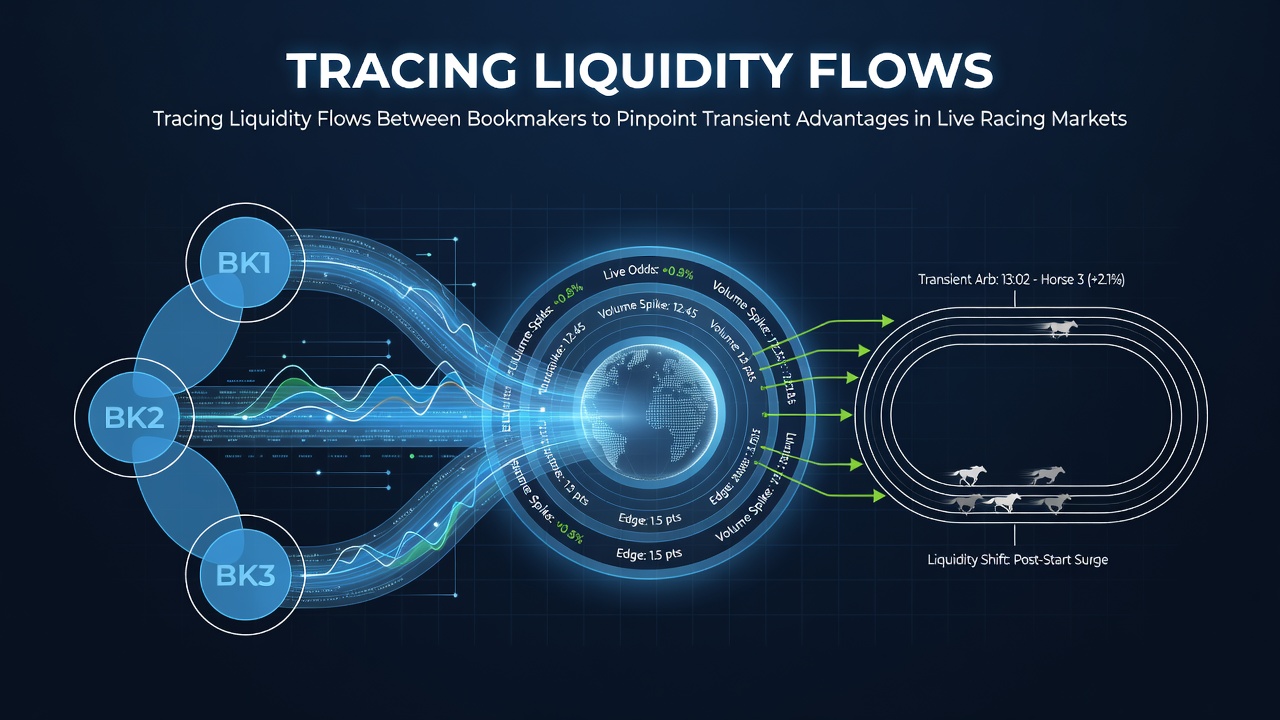
Tracking Cross-Bookie Liquidity Movements for Fleeting Edges in Live Horse Racing
Bookmakers adjust odds continuously as money enters their systems during live horse racing events, and observers note that large wagers placed on one platform often trigger rapid recalibrations that ripple outward to competitors within seconds. Those who've examined betting data streams know these adjustments reflect liquidity levels, where higher volumes tighten spreads while lower liquidity leaves room for discrepancies across operators. Researchers discovered that monitoring simultaneous feeds from several bookmakers reveals moments when one platform lags behind the collective market movement, creating short windows where bettors can act before corrections occur.
How Liquidity Travels Between Platforms
Data from major racing markets shows that professional syndicates frequently split substantial stakes across multiple operators to minimize immediate price impact on any single site, yet the combined effect still propagates through shared risk management systems and automated pricing algorithms. When a large bet hits one bookmaker during the final minutes before a race, algorithms at rival firms detect the shift through aggregated market signals and begin to mirror the adjustment, although the timing varies based on each operator's data integration speed. Studies found that platforms with slower refresh rates sometimes retain outdated odds for several seconds longer than their faster counterparts, and people monitoring these flows exploit the interval by placing opposing positions elsewhere.
Tools and Data Sources Used in Practice
Specialized software aggregates real-time odds from dozens of licensed operators, timestamps each change, and flags anomalies where a single bookmaker's line diverges from the emerging consensus. According to reports published by the Racing South Australia integrity unit, such divergences appear most often in lower-profile races where overall liquidity remains thinner and fewer professional accounts participate. Analysts cross-reference these flags against historical patterns, noting that certain bookmakers consistently trail the market during high-volume periods such as evening race cards in July 2026.
Identifying Transient Advantages in Live Markets
Live racing markets move faster than pre-race ones because in-running liquidity concentrates around specific outcomes once the horses break from the gate, and observers note that money flowing into one result at one bookmaker can leave another operator's corresponding line temporarily misaligned. Take one dataset reviewed by market analysts which revealed that during a sequence of Australian jumps races, a mid-tier operator maintained an inflated price on an outsider for nearly twelve seconds after larger platforms had already shortened the same runner following heavy support elsewhere. Those monitoring multiple streams placed small stakes on the lagging line before the correction arrived, demonstrating how liquidity tracking isolates these brief mismatches without requiring predictive models of horse performance.
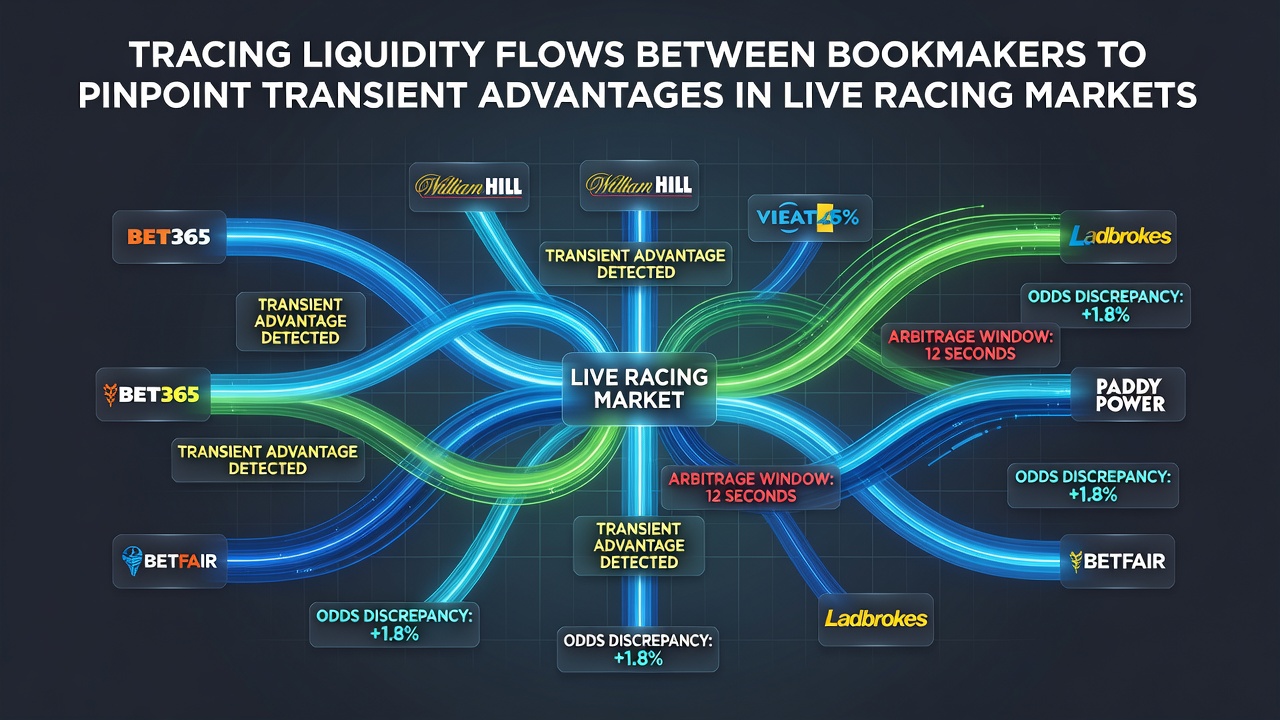
Evidence suggests the advantage duration depends on each bookmaker's risk engine update frequency, with some European operators refreshing every 800 milliseconds while others require up to three seconds during peak activity. Researchers discovered that these timing differences widen when multiple large syndicates place coordinated bets across several accounts, overwhelming slower systems and extending the window before prices converge. Figures reveal that such convergence typically completes within five to eight seconds once the initial liquidity surge registers across the broader market.
Practical Considerations for Market Participants
Operators impose stake limits and account reviews when they detect patterns consistent with liquidity-based strategies, so participants distribute activity across numerous accounts and vary bet sizes to avoid triggering automated alerts. Data indicates that July 2026 saw increased adoption of multi-account routing tools among professional groups, partly because regulatory changes in several jurisdictions required faster reporting of large in-running positions. Those who've studied compliance records note that operators now share more anonymized flow data with each other to improve collective risk management, which in turn reduces the average duration of exploitable lags.
Conclusion
Liquidity tracking across bookmakers supplies factual signals about momentary pricing inconsistencies in live racing markets, and market participants who maintain simultaneous data connections can identify these windows through direct comparison rather than forecasting. Reports from independent research bodies such as the Horse Racing Research Association confirm that the frequency of such inconsistencies correlates with overall market depth and operator technology levels. Observers note that continued improvements in automated pricing systems across the industry may further compress these intervals, although current evidence shows they remain measurable during many live events.