Tennis Surface Sequences: Layering Accumulator Strategies Through Court-Specific Dependencies
Tina Bennett · Jul 27, 2026
Tennis Surface Sequences: Layering Accumulator Strategies Through Court-Specific Dependencies
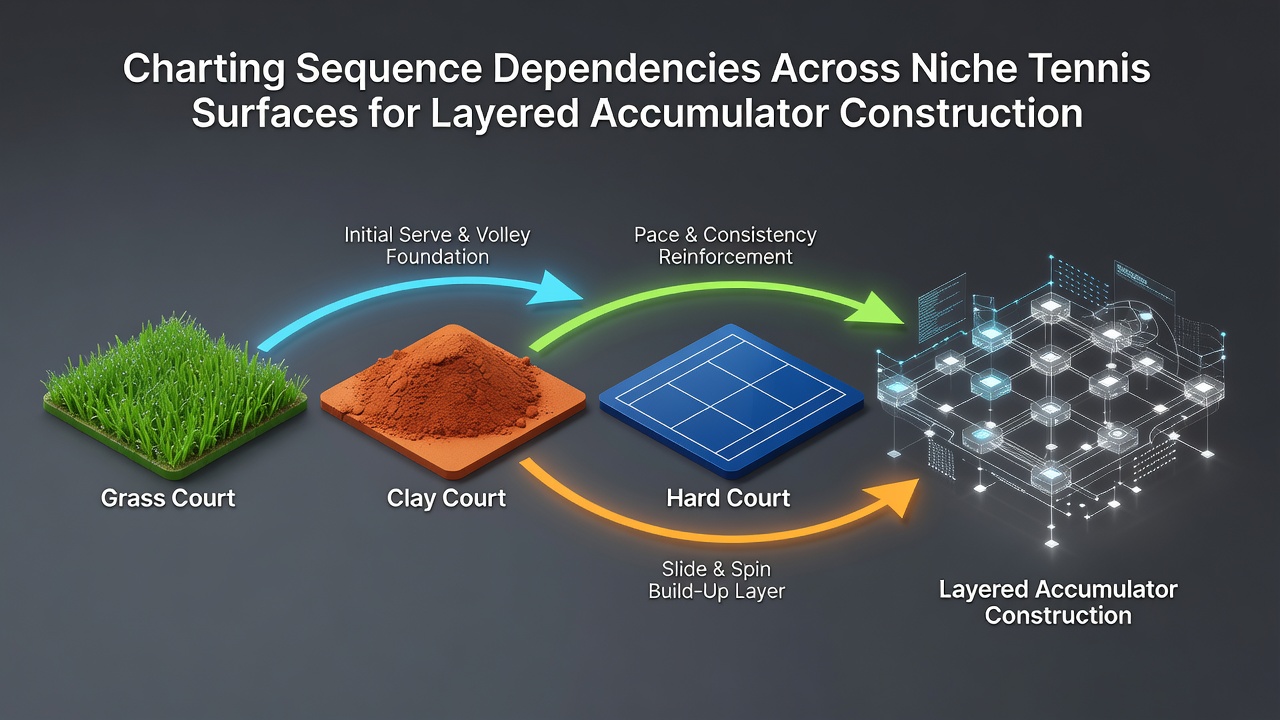
Sequence dependencies emerge when players move between tennis surfaces in quick succession, and these transitions create measurable patterns that influence match outcomes across consecutive events. Data from major tours shows that performance shifts often follow predictable lines once surface type, court speed, and bounce characteristics enter the equation. Observers note that clay courts slow the ball and increase rally length while grass favors shorter points and serve dominance, yet the real complexity arises when a player switches from one to the other within days.
Core Surface Categories and Their Distinct Properties
Standard classifications include outdoor red clay, indoor hard courts, and natural grass, but niche variants add further layers. Green clay in parts of the United States plays faster than European red clay, while indoor carpet remnants in older venues produced even lower bounce. Hard-court speeds range from slow to medium-fast depending on the acrylic coating, and these differences compound when schedules force rapid surface changes. Tournament calendars released for 2026 list multiple events where competitors travel from European clay swings directly to North American hard-court stops, creating measurable recovery and adaptation windows that statistics track closely.
Tracking Dependencies Across Consecutive Matches
Researchers track win-rate differentials when the same player competes on surface A then surface B. One study released by a sports science group in Australia found that clay-to-grass transitions reduced baseline-oriented players' success rates by measurable margins in the first grass-court match, while serve-heavy competitors maintained steadier results. These patterns become building blocks for layered accumulators because each leg of a multi-bet can be weighted according to documented transition effects rather than isolated match data. July 2026 schedules include several such transitions during the lead-up to Wimbledon, giving analysts fresh datasets to refine models.
Constructing Layered Accumulators With Surface Data
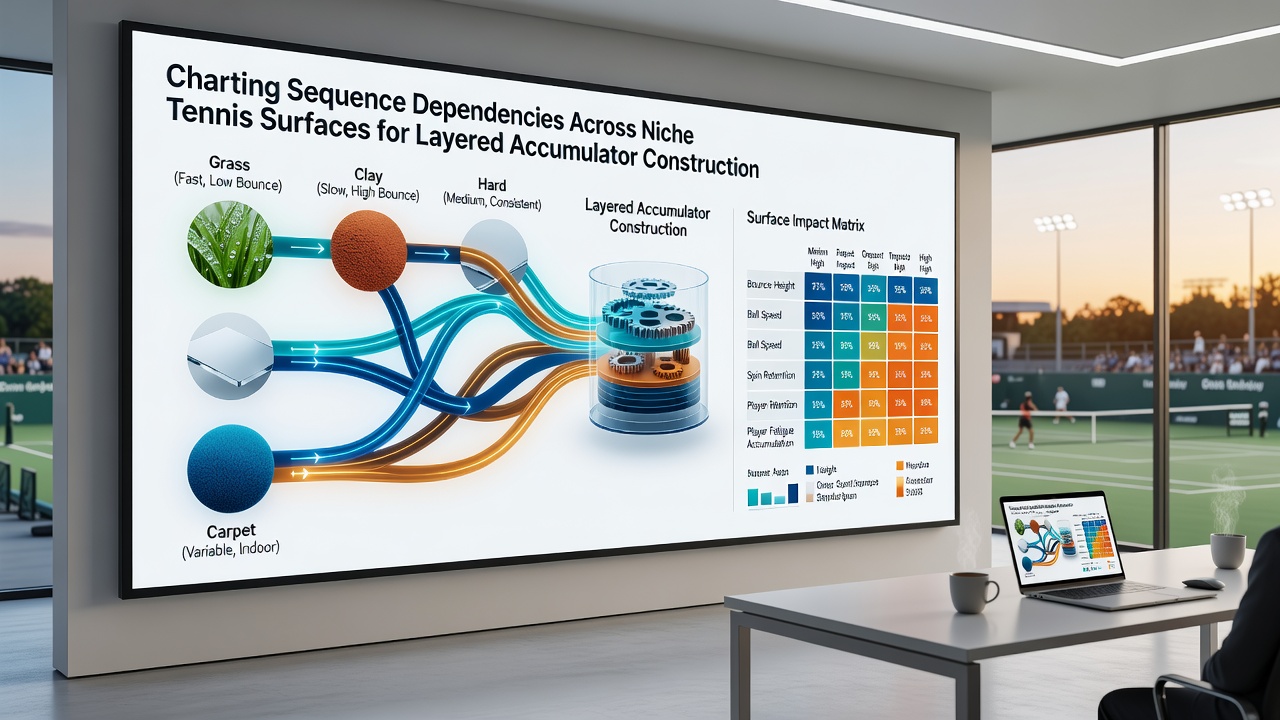
Layered accumulators divide stakes across multiple legs that each incorporate surface-sequence variables. A typical structure might begin with a clay-court leg where longer rallies favor endurance players, then add a grass-court leg where serve statistics dominate, and finish with an indoor-hard match where lighting and court temperature introduce additional variables. Each layer uses historical transition data to adjust implied probabilities. According to ITF technical reports, players who compete on three different surfaces within ten days show performance variance that exceeds single-surface consistency by noticeable margins, and these variances feed directly into stake allocation formulas.
Case Examples From Recent Tours
Take one player who reached quarterfinals on red clay in Madrid before traveling to Stuttgart grass the following week. Performance metrics collected by tournament statisticians revealed drops in first-serve points won and increases in unforced errors during the opening grass matches. Accumulator builders who incorporated these documented shifts adjusted the second leg odds accordingly, creating combinations that reflected actual sequence effects rather than generic player rankings. Similar patterns appear when competitors move from fast indoor hard to slower outdoor clay, where footwork adjustments require additional time that short turnaround schedules do not always allow.
Data Sources and Measurement Tools
Performance databases maintained by tour organizers and independent analytics firms supply the raw numbers. Metrics include rally length averages, serve percentages broken down by surface, and recovery intervals between events. A Canadian research institute published findings in early 2026 that linked specific surface transitions to elevated injury rates, further influencing availability models used in accumulator construction. These figures allow builders to layer selections that account for both performance and durability variables across multiple matches.
Practical Application in Accumulator Design
Builders begin by listing upcoming events and their surface types, then map each player's recent surface history. They calculate adjustment factors for each transition and insert those factors into probability estimates for individual legs. The resulting structure spreads risk across correlated yet distinct surface conditions, which reduces the impact of any single unexpected outcome. Data shows that accumulators built this way maintain steadier long-term yield curves compared with selections that ignore sequence information.
Conclusion
Surface sequence analysis supplies a factual framework for constructing layered accumulators that reflect documented performance shifts rather than isolated assumptions. As tournament calendars continue to place rapid surface changes on player schedules, the available datasets grow and the precision of these models improves. Observers continue to monitor July 2026 transitions for additional evidence that refines existing approaches.