Portable Apps That Sync Odds Disparities With Custom Stake Formulas Across Mixed Sport Markets
Hugo Hartmann · Jun 4, 2026

Portable Apps That Sync Odds Disparities With Custom Stake Formulas Across Mixed Sport Markets
Portable applications designed for cross-market monitoring pull live pricing feeds from numerous operators while calculating stake adjustments through user-defined algorithms that respond to detected price variations. These systems operate across football, tennis, basketball, and other disciplines simultaneously, allowing synchronization of data streams that flag inconsistencies without requiring constant manual input from the operator. Research from the University of Nevada, Las Vegas International Gaming Institute shows adoption rates climbed steadily through early 2026 as device processing power improved and API access expanded. Developers build these tools around modular frameworks that accept custom formulas such as adjusted Kelly variants or proportional allocation rules based on variance estimates. When an odds disparity appears between two or more sources, the software applies the selected staking logic to generate position sizes that scale according to available bankroll parameters entered by the account holder. Observers note that integration with multiple sports markets demands robust data normalization layers because each sport carries distinct volatility profiles and settlement timelines.Core Technical Components
Real-time data ingestion forms the foundation, with applications polling bookmaker endpoints at intervals measured in seconds rather than minutes to capture fleeting price movements. Once ingested, the information passes through disparity detection engines that compare equivalent selections across events, accounting for commission structures and currency conversions where necessary. Custom stake modules then execute the formula chosen by the user, outputting recommended wager amounts that reflect both the edge calculation and risk tolerance settings stored in the profile.
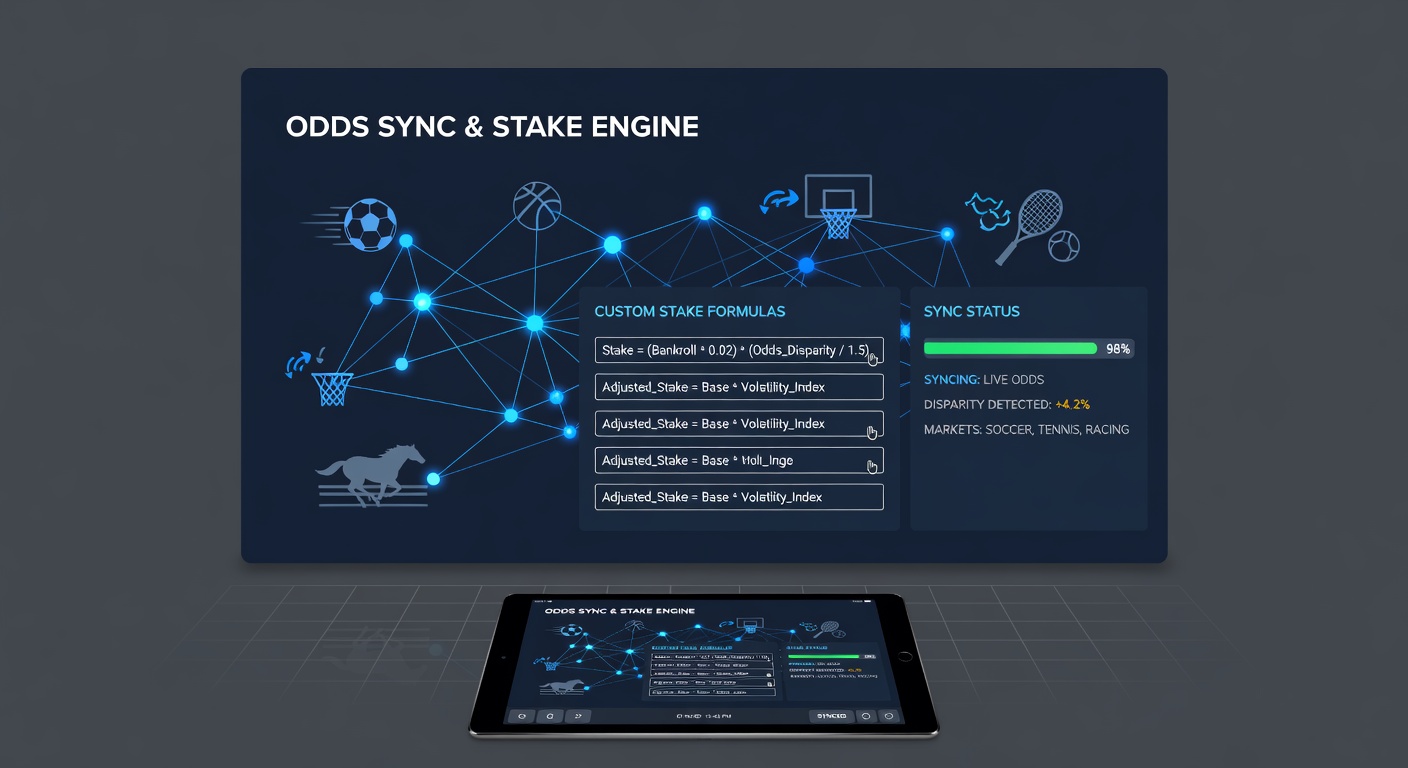
Users configure these formulas through interface sliders or direct code entry fields, with options to weight variables such as historical hit rates, current market liquidity, and correlation factors between simultaneous positions in different sports. The application stores historical pricing archives locally or in cloud repositories, enabling backtesting of the selected staking approach against past data sets before live deployment.
Cross-Sport Synchronization Mechanics
Handling mixed sport portfolios requires the software to normalize disparate event structures, from set-based tennis scoring to goal-difference calculations in football. Algorithms map these structures onto common probability frameworks so that stake recommendations remain consistent regardless of the underlying contest type. Data aggregation occurs through unified dashboards that display active opportunities side by side, grouped by sport or by expected completion window.
June 2026 marked expanded regulatory scrutiny in several jurisdictions over automated staking features, prompting some developers to add compliance toggles that restrict formula complexity when accounts operate under specific licensing conditions. These adjustments allow continued functionality while aligning with updated reporting requirements issued by bodies such as the Nevada Gaming Control Board.
Practical Implementation Patterns
Operators typically begin by establishing baseline bankroll allocations within the app, then select from preset formula templates or build bespoke versions through guided wizards. Once active, the system monitors selected markets continuously and surfaces alerts when disparities exceed user-defined thresholds. Position sizing updates automatically if odds shift before execution, maintaining alignment with the underlying custom logic.
Integration with external data services supplements native feeds during high-volume periods, such as major tournament weekends when multiple sports run concurrently. Case examples documented by the Australian Gambling Research Centre illustrate how users combine football and tennis positions within single sessions, relying on the application's correlation matrix to adjust stakes and limit cumulative exposure.
Security and Data Handling Considerations
Encryption standards protect both stored formulas and live account credentials, while two-factor authentication layers restrict unauthorized access to staking profiles. Audit logs record every generated recommendation together with the input data that triggered it, providing traceability for users who review performance over extended periods. Developers continue refining latency reduction techniques because even brief delays can erase small pricing advantages in fast-moving markets.
Conclusion
Portable applications that combine real-time odds synchronization with customizable staking formulas represent a technical response to fragmented pricing across sports betting platforms. Their architecture supports simultaneous operation across varied event types while enforcing user-specified risk parameters through algorithmic execution. Continued refinement of data pipelines and regulatory adaptation will shape further development trajectories in this segment.