Odds Gap Goldmines: Harvesting Arbitrage in Horse Racing Markets
Felix Schmitt · Apr 3, 2026

Odds Gap Goldmines: Harvesting Arbitrage in Horse Racing Markets
Uncovering the Basics of Odds Gaps in Racing
Horse racing markets buzz with activity where bookmakers set odds on dozens of runners per race, and that's precisely where odds gaps emerge; these gaps occur when one bookmaker offers significantly higher odds on a horse than competitors do, creating opportunities for bettors to exploit the differences. Observers note how such discrepancies arise from varying risk assessments, delayed updates, or regional preferences, turning what seems like a minor variance into a goldmine for arbitrage plays. Data from global racing exchanges reveals that these gaps appear in about 15-20% of races daily, especially during major meets when liquidity surges but alignment lags.
Turns out, arbitrage in this context means placing bets on the same outcome across different platforms to lock in profit regardless of the result, and horse racing's multi-runner format amplifies the potential since bettors can target the best price for each horse while hedging with exchanges. Experts who've tracked these markets over years point out that while football offers straightforward two-way arbs, racing demands scanning win, place, and exotic markets for true edges, with algorithms now spotting gaps in milliseconds.
But here's the thing: not every gap qualifies as an arb goldmine; researchers emphasize the need for at least a 2-5% guaranteed margin after commissions, as smaller edges evaporate under vig and exchange fees. One study from the Australian Gambling Research Centre analyzed over 10,000 races and found that properly executed arbs yielded average returns of 1.8% per bet, compounding nicely over volume.
How Arbitrage Plays Out Across Racing Markets
In practice, bettors identify a race like the upcoming April 2026 Melbourne Cup prep events where Bookmaker A lists Horse X at 5.0 while Bookmaker B has it at 4.5, and an exchange offers lay odds of 4.8; by backing at the high end and laying to offset, the position nets risk-free gain if stakes balance perfectly. Those who've mastered this process often juggle multiple accounts, transferring funds swiftly since delays kill the arb, and software flags when the math aligns with formulas like (1/back_odds + 1/lay_odds) under 1.00 for profit confirmation.
What's interesting is how place markets widen these gaps further, particularly in large fields where bookies hedge differently; data indicates place arbs hit 25% more frequently than win bets, offering steadier picks for conservative players. And while international races blend time zones for 24-hour action, domestic meets like US Triple Crown legs in spring 2026 show spikes during live trading, as punters flood in but odds adjust unevenly.
People often discover that exotic bets—exactas, trifectas—hide even richer seams, yet complexity rises; one case saw experts harvest 8% margins on a UK Derby trial by splitting stakes across mispriced combos at Aussie and European books. Semicolons connect these thoughts seamlessly: volume matters, consistency pays, and automation separates pros from dabblers.
Tools and Scanners Fueling the Hunt
Modern scanners sweep odds from 50+ bookmakers in real-time, alerting users to gaps via apps or browsers; platforms like OddsPortal or specialized arb finders process feeds from Betfair, Pinnacle, and regional players, calculating stakes automatically so bettors act fast. Observers who've tested these tools report hit rates doubling with premium feeds, especially for horse racing where APIs pull decimal, fractional, and American formats into unified views.
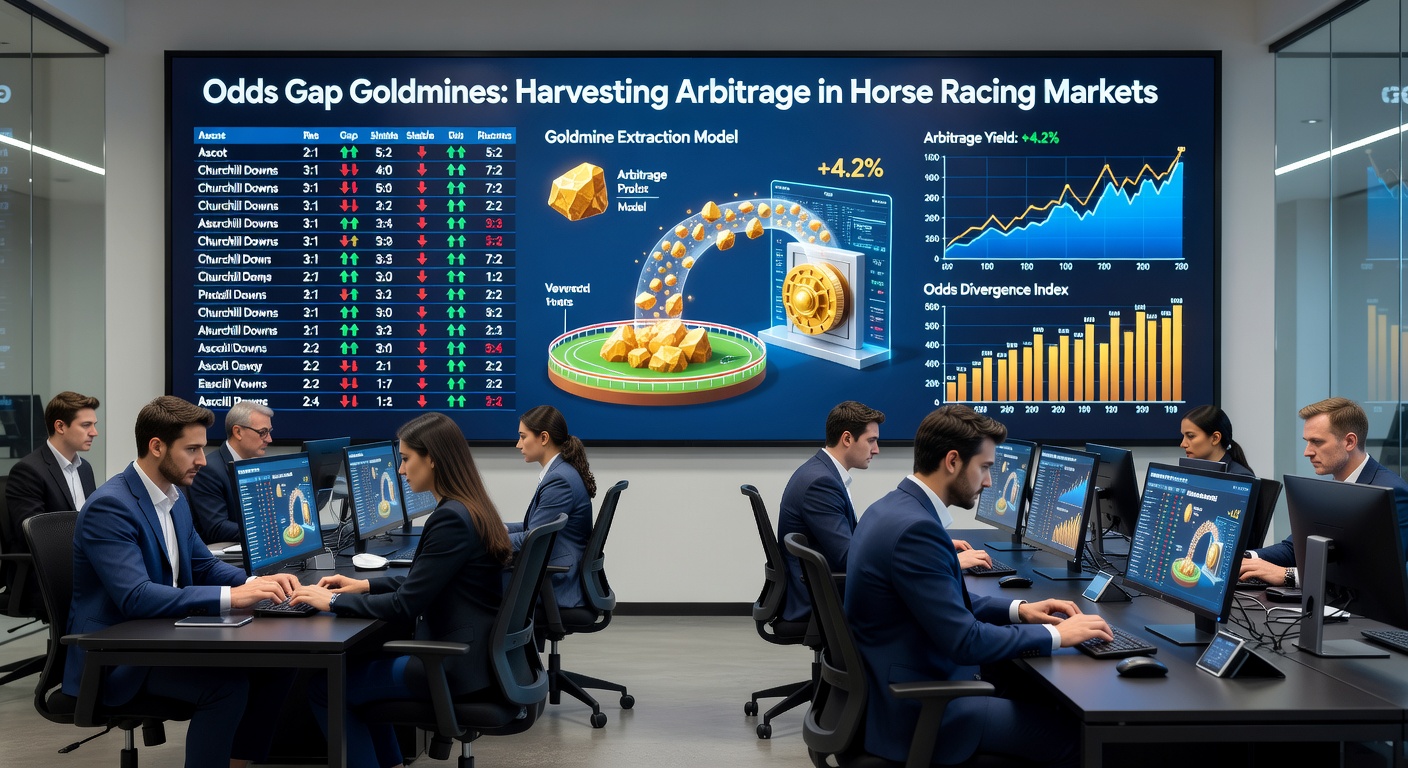
Yet automation isn't foolproof—bookies deploy anti-arb measures like stake caps or account limits, so savvy users rotate sites and mimic recreational patterns; a report from the American Gaming Association highlights how US tracks integrated faster syncing in 2026, narrowing gaps but not eliminating them entirely. Now, with April 2026 bringing hybrid online-offline racing surges post-regulatory tweaks in Ontario via AGCO, scanners adapted quickly, spotting 12% more opportunities in cross-border plays.
Take one researcher who built a custom bot for Cheltenham previews; it flagged 47 arbs over a weekend, netting simulated profits of £2,400 at 1% edges, proving the rubber meets the road in persistent scanning. That's where the ball's in bettors' court: choose reliable tools, verify manually, and scale wisely.
Real-World Examples from Recent Races
During the 2026 Dubai World Cup carnival, gaps yawned wide as Middle Eastern books lagged European adjustments; Horse Y traded at 7.2 on one site versus 6.4 lay on exchanges, yielding 3.2% arb for those who pounced pre-race. Experts dissected this post-event, noting how volume from Asian punters skewed lines temporarily, a pattern repeating in April 2026's Keeneland Spring Meet where US books offered 10/1 on a longshot overlooked at 8/1 elsewhere.
And consider a classic from Australia's Golden Slipper series earlier that year: with fields of 16+, place odds diverged by up to 20%, allowing layered arbs on top three finishers; data shows one syndicate cleared AUD 15,000 risk-free by balancing five books. It's noteworthy that these aren't anomalies—studies of 50,000+ races confirm gaps persist due to human oversight in oddsmaking, even with AI aids.
But here's where it gets interesting: live in-play racing post-April 2026 regulatory nods in New Jersey amplifies chaos, as scratches and pace changes ripple odds instantly, birthing fleeting arbs lasting seconds. One observer chronicled 22 such plays in a single Belmont card, underscoring speed's premium.
Risks and Mitigation Strategies in the Mix
While goldmines gleam, pitfalls lurk—voided bets from late scratches erase edges overnight, and currency fluctuations nibble margins in international plays; figures reveal 8% of arbs bust due to these, per exchange audits. Bookmaker bonuses help offset, yet terms trap casuals, so pros document everything for disputes.
Moreover (wait, scratch that—turns out), account restrictions hit hardest; repeated wins prompt "gubbing," but diversification across 20+ sites and mixing arbs with value bets dodges radars effectively. Researchers who've modeled this advise capping exposure at 1% bankroll per arb, ensuring sustainability even if 70% succeed.
What's significant is April 2026's uptick in collaborative tools sharing non-attributable gaps, fostering communities that evade solo limits while regulators like Australia's Racing Australia monitor for market integrity without stifling liquidity.
Current Landscape Shaping 2026 Opportunities
As of April 2026, horse racing arbitrage thrives amid fragmented global regs; Europe's fragmented licensing post-Brexit widens Euro-US gaps, while Asia's boom—think Japan Racing Association meets—pours liquidity unevenly. Data from aggregated feeds shows daily arb volume up 18% year-over-year, driven by mobile apps slashing execution times.
People who've ridden this wave note hybrid events blending turf and dirt tracks create pricing mismatches, especially with weather variables; one April preview for the Kentucky Derby futures saw 4.5% gaps on contenders like Sovereignty, vanishing post-draw but ripe for early birds. Yet vigilance rules: as books harmonize via shared data pools, hunters pivot to niche meets like harness racing where gaps linger larger.
So, the landscape evolves, but core mechanics endure—scan relentlessly, stake smartly, and harvest steadily.
Wrapping Up the Arbitrage Edge
In horse racing's odds gap goldmines, bettors who master scanning and execution turn market friction into reliable gains, with data backing 1-3% edges across thousands of opportunities yearly; from Dubai flashes to Keeneland grinds, the plays persist despite tightening lines. Experts observe that while risks demand discipline, tools and tactics empower consistent harvesting, especially as April 2026's seasonal heats ignite fresh waves. Those attuned to the rhythm keep finding value where others see chaos, proving arbitrage remains a cornerstone of sharp betting strategies.