Managing Capital Reserves to Support Value Hunting in Football and Equine Betting Markets
Hugo Hartmann · Jun 13, 2026
Managing Capital Reserves to Support Value Hunting in Football and Equine Betting Markets
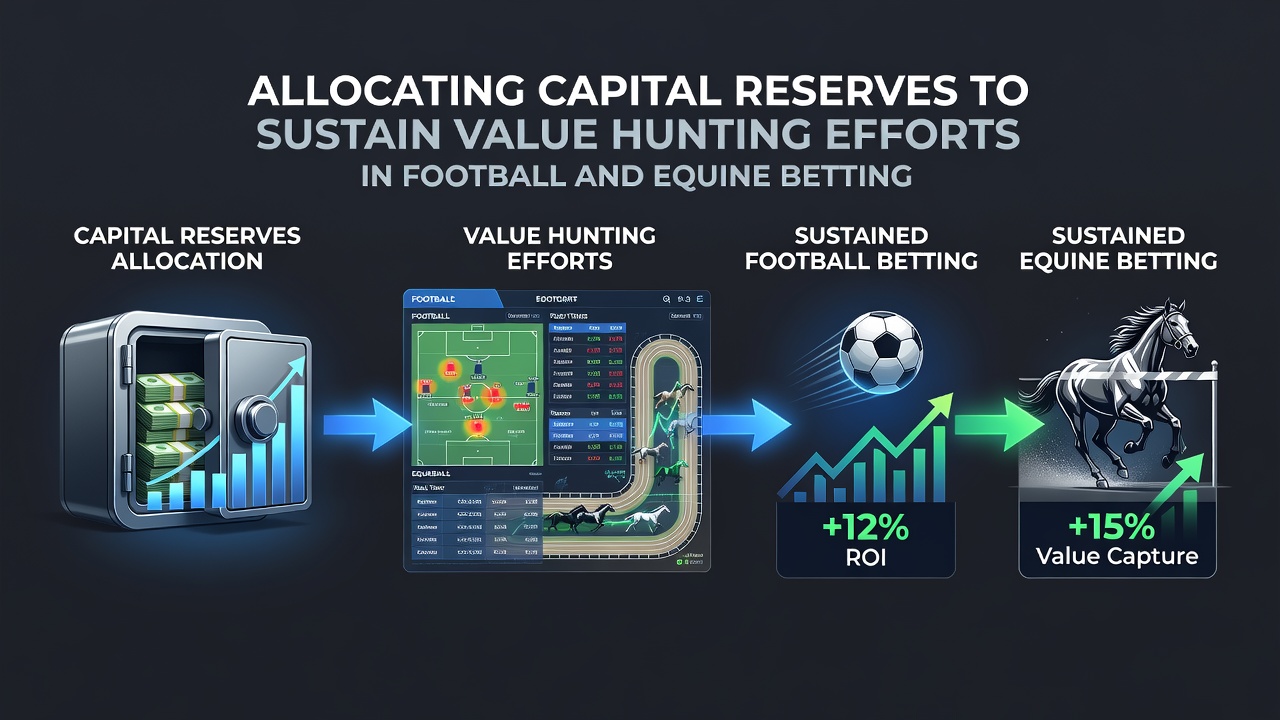
Capital allocation in betting environments requires structured approaches that separate operational funds from protective reserves, and observers note how this separation helps maintain consistent value identification across football leagues and equine competitions. Data from multiple industry analyses show that bettors who designate specific percentages of their total bankroll for reserve purposes often sustain longer participation periods compared to those who operate without such distinctions. Research indicates that typical reserve allocations range from 20 to 40 percent of overall capital, with the exact figure depending on the volatility of selected markets and historical drawdown patterns observed in similar strategies.
Core Principles Behind Reserve Structures
Effective reserve frameworks begin with clear definitions of what constitutes value in both football and equine contexts, and practitioners establish these definitions before any funds get deployed. Football markets frequently feature high liquidity during major European fixtures, while equine events at festivals create concentrated opportunities around specific race types, yet both demand separate tracking mechanisms to prevent cross-contamination of capital pools. Studies from academic institutions such as the University of Nevada Reno have examined how segmented bankrolls reduce the frequency of forced withdrawals during losing sequences, and their findings reveal measurable differences in session length between segmented and non-segmented approaches.
Those who study betting sustainability emphasize that reserves function as buffers rather than active betting funds, which means they remain untouched until predefined trigger conditions occur. These triggers might include consecutive drawdowns exceeding 15 percent of the operational pool or shifts in market liquidity that temporarily reduce available edges. Because football seasons run continuously across multiple continents while equine calendars feature distinct peaks, the timing of reserve reviews often aligns with these natural cycles to reflect changing opportunity sets.
Practical Allocation Methods Across Market Types
Allocation tactics differ when applied to football versus equine betting because the underlying data availability and odds movement patterns vary substantially between the two. Football value hunters commonly track expected value calculations derived from multiple bookmakers simultaneously, and they adjust reserve levels upward during periods of fixture congestion when variance tends to increase. Equine bettors meanwhile focus on pace analysis and trainer statistics that become more reliable in larger fields, leading some to maintain higher reserve percentages ahead of major meetings where field sizes expand dramatically.

One documented method involves monthly reserve recalibration based on realized returns rather than projected figures, and this practice prevents overcommitment after unusually strong periods. Reports compiled by research groups in Australia show that bettors following recalibration schedules experienced fewer instances of reserve depletion during 2025 and early 2026 compared to those using static percentages. June 2026 data from several European operators further indicated that participants who reviewed allocations after major tournament conclusions maintained steadier operational pools heading into quieter summer months.
Monitoring and Adjustment Protocols
Continuous monitoring relies on performance metrics that separate operational results from reserve status, and software tools now allow automated alerts when ratios approach critical thresholds. Observers have documented cases where early intervention through modest reserve top-ups preserved overall strategy continuity without requiring full capital restarts. Because both football and equine markets experience periodic liquidity droughts, protocols often include seasonal adjustments that increase reserve targets ahead of known low-activity windows.
Industry organizations tracking betting behavior note that transparent record-keeping around reserve movements correlates with longer participation spans, particularly when records distinguish between planned draws and emergency access events. This distinction matters because unplanned draws frequently signal underlying issues with value identification rather than simple variance, prompting reviews of selection criteria alongside capital adjustments.
Conclusion
Reserve allocation practices continue to evolve alongside changes in market structures and data availability, and those who maintain disciplined separation between operational and protective capital demonstrate greater consistency over extended timeframes. Figures from multiple regulatory and academic sources confirm that structured approaches reduce the likelihood of complete capital exhaustion during extended variance periods, whether in football or equine environments. The ongoing development of tracking tools and recalibration methods suggests that future refinements will further support sustained value hunting across both sectors without altering the fundamental requirement for clear capital boundaries.