Ledger Lines and Layered Risks: Dividing Funds to Capture Gaps in Cross-Market Wagers
Bianca Klein · Jul 11, 2026
Ledger Lines and Layered Risks: Dividing Funds to Capture Gaps in Cross-Market Wagers
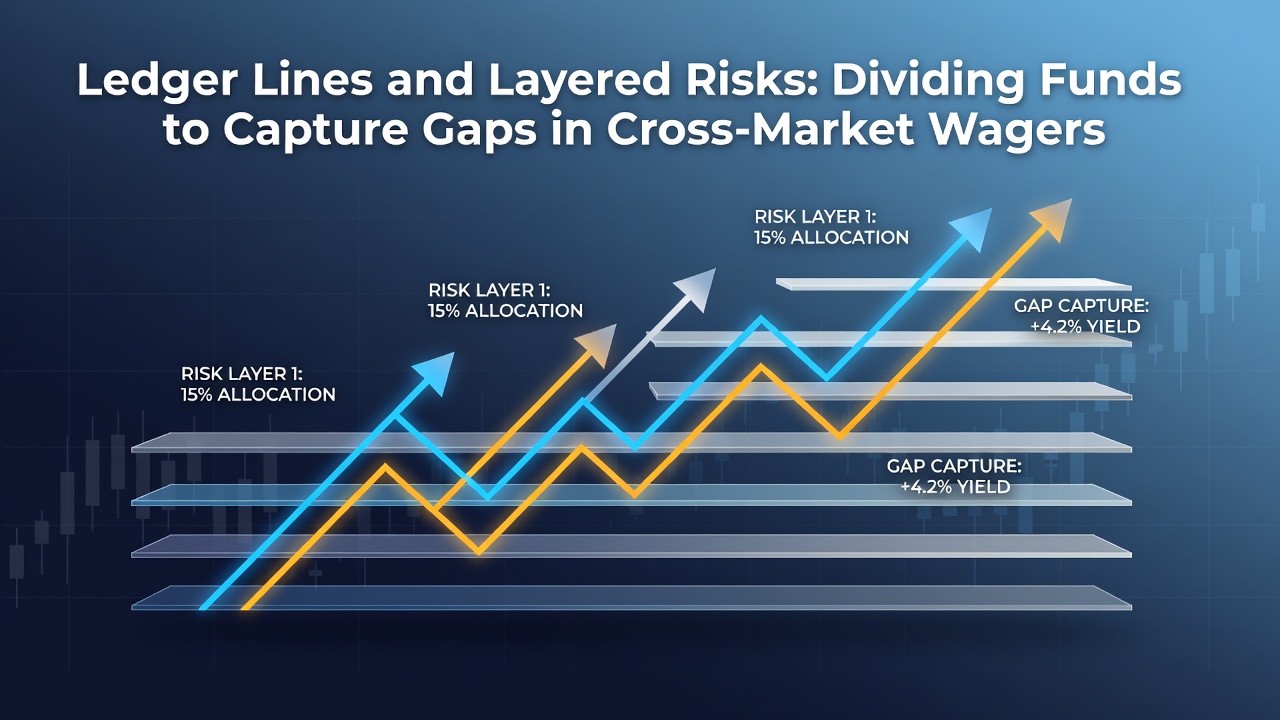
Cross-market wagers involve placing stakes on interconnected outcomes that span different sportsbooks or event segments, and observers note that ledger lines serve as the accounting framework bettors use to track these positions in detail. Researchers have documented how dividing available capital into distinct layers allows participants to address pricing inconsistencies without exposing the entire bankroll to simultaneous drawdowns, and data from multiple jurisdictions indicates this approach gained traction as liquidity increased across international platforms during the first half of 2026.
Defining Ledger Lines in Practice
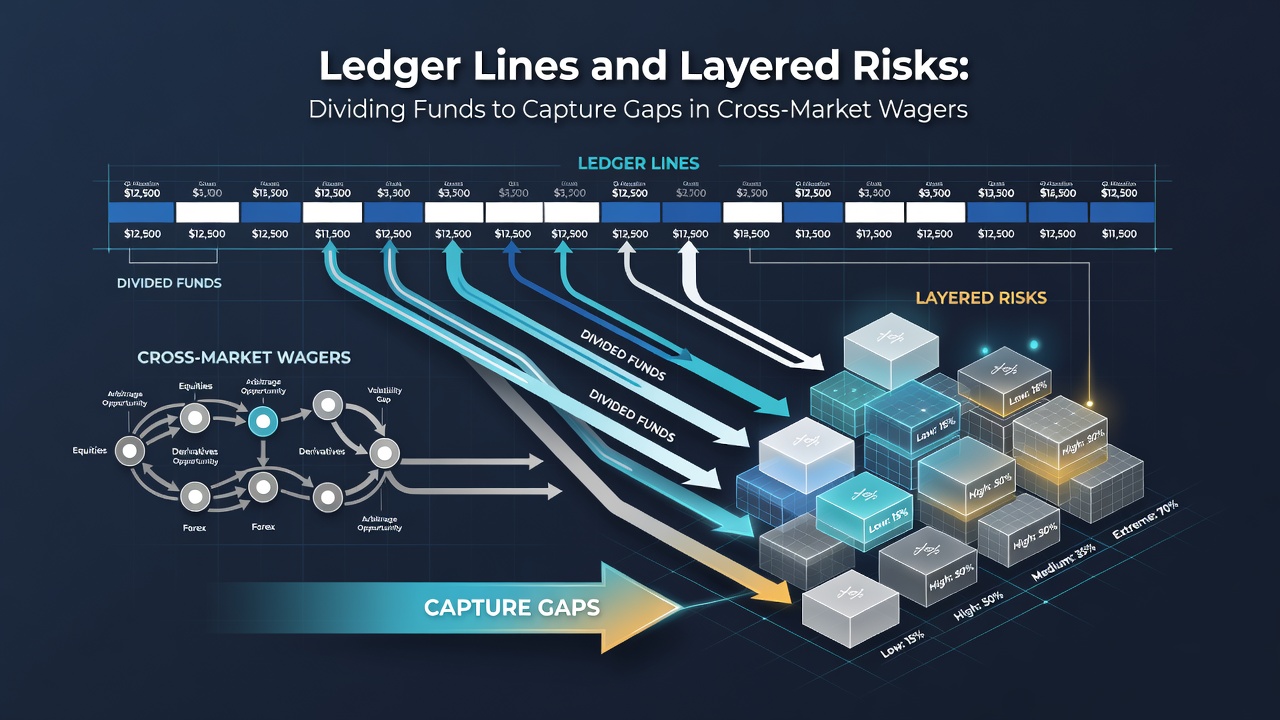
Ledger lines function as chronological records that log each wager, stake size, market type, and resulting variance, which enables systematic review of performance across separate exchanges. Those who maintain such records report that entries capture both matched and unmatched positions, while columns for expected value and realized return help isolate where discrepancies arise between correlated markets such as total goals in one league and player assists in another. Figures released in July 2026 by the Pennsylvania Gaming Control Board showed that operators handling multi-jurisdictional traffic recorded a 14 percent rise in cross-market activity compared with the prior quarter, underscoring the volume of transactions that require precise documentation.
Layered Risk Allocation
Dividing funds into risk strata begins with a base layer sized to cover high-probability outcomes that exhibit small but persistent pricing gaps, and subsequent layers receive progressively smaller allocations as uncertainty widens. Experts at the Canadian Centre on Substance Use and Addiction have examined how this tiered structure limits the impact of correlated losses when outcomes in one market influence pricing in another, and their analysis of transaction data indicates that participants who cap each layer at no more than 8 percent of total capital experience fewer account-level drawdowns exceeding 15 percent. The method relies on independent verification of odds feeds, which reveals temporary misalignments that can be exploited before markets realign.
Identifying Gaps Across Markets
Market gaps appear when odds offered on related contingencies diverge beyond the combined margins of the involved operators, and scanners that compare live feeds across regions flag these opportunities within seconds of emergence. One documented case involved a European football match where the half-time total goals line differed by 0.35 between two exchanges while the full-time result market remained aligned, creating a narrow window for a layered entry. Those who monitor such patterns emphasize that confirmation requires simultaneous liquidity checks to ensure the intended stakes can be placed before prices adjust.
July 2026 data compiled by the Australian Gambling Research Centre further illustrated that average price discrepancies in lower-tier tennis and basketball markets reached 2.8 percent during evening sessions, a level sufficient to offset operator margins when stakes are distributed across three distinct risk layers. The same report noted that operators in regulated Australian states observed a corresponding increase in multi-account activity, prompting additional reconciliation requirements for transaction ledgers.
Execution Mechanics adn Documentation
Execution begins with allocation of the primary layer to the most liquid market, followed by secondary and tertiary layers that target offsetting positions on adjacent exchanges. Each placement receives a unique ledger identifier that records timestamp, odds differential, and exposure limit, which facilitates post-session reconciliation and variance analysis. Observers note that software tools capable of exporting these entries in standardized formats reduce manual errors, and jurisdictions such as those overseen by the Nevada Gaming Control Board now require operators to retain such records for a minimum of five years when accounts exceed defined activity thresholds.
Regulatory Context and Reporting Standards
Regulatory bodies outside the United Kingdom have begun requesting aggregated ledger summaries to monitor systemic exposure, and the European Gaming and Betting Association published guidance in early 2026 that encourages operators to accept layered stake reports as evidence of responsible position sizing. These requirements do not prescribe specific allocation percentages but stress that documentation must allow reconstruction of each decision path. Research teams at the University of Sydney’s Gambling Treatment and Research Clinic have collected anonymized ledger samples showing that bettors who segment capital into four or more layers maintain steadier equity curves across multi-week periods than those who consolidate positions in fewer buckets.
Conclusion
Ledger lines combined with layered fund division provide a structured method for addressing pricing gaps in cross-market wagers while containing drawdown exposure. Available data from regulatory and academic sources in North America, Europe, and Australia indicate that systematic recording and tiered allocation correlate with reduced variance in account performance. As platforms continue to expand live cross-market offerings, the maintenance of precise ledgers and disciplined layer sizing remains central to capturing such opportunities within defined risk parameters.