Isolating Uncorrelated Factors to Strengthen Multi-Selection Soccer Wagers
Tina Bennett · Jul 23, 2026
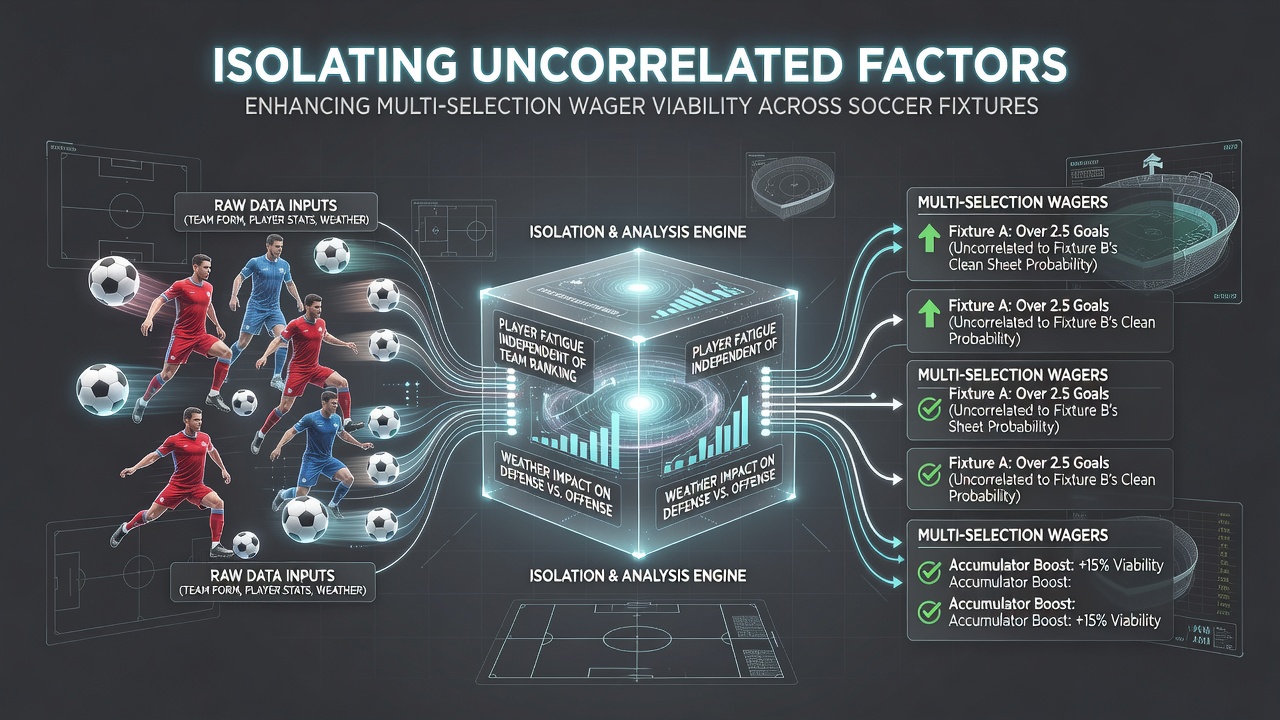
Isolating Uncorrelated Factors to Strengthen Multi-Selection Soccer Wagers
Analysts examine soccer fixtures by breaking down elements that operate independently rather than sharing direct connections, and this separation supports more stable multi-selection wagers because each leg rests on distinct influences instead of overlapping risks. Data from major European leagues in recent seasons shows that accumulators built around correlated outcomes, such as multiple teams favored due to similar attacking styles, experience higher variance than those assembled from unrelated factors like one side's defensive record against set pieces paired with another's travel fatigue in a midweek fixture.
Defining Uncorrelated Elements in Football Markets
Researchers categorize variables such as pitch conditions, referee tendencies, squad rotation patterns, and fixture congestion as potential candidates for isolation when they demonstrate low statistical interdependence across separate matches. Studies from academic institutions in North America indicate that home advantage metrics often remain independent from weather impacts in northern European venues during early autumn, allowing bettors to construct selections where one outcome draws from venue familiarity while another hinges on precipitation forecasts without shared causation.
Practical Application Across Premier League and European Competitions
Observers track how a team's clean sheet probability in one fixture can stand apart from an opposing side's expected goals in a concurrent match when the drivers differ in nature, for instance combining a goalkeeper's recent save percentage with an underdog's historical performance against lower-pressing opponents. In July 2026 pre-season analyses, data aggregators noted increased fixture lists for continental clubs participating in expanded tournaments, creating opportunities to isolate travel recovery periods from domestic form indicators that rarely align in timing or impact.
Those who review historical results find that pairing a high-scoring tendency tied to specific attacking personnel with an independent low-card rate linked to a particular referee assignment reduces the chance that one adverse event cascades through the entire selection. European betting operators report that such constructions appear more frequently in markets covering multiple divisions, where lower-league defensive solidity metrics show minimal correlation with top-flight possession statistics.
Methods for Identifying Independent Variables
Statistical tools help separate factors by calculating covariance across datasets spanning multiple seasons, and software platforms now flag pairings where correlation coefficients fall below established thresholds. One approach involves cross-referencing injury reports with motivational elements such as European qualification implications, since these rarely share direct pathways in the same matchweek yet both influence expected outcomes. Reports from the European Gaming and Betting Association highlight how operators in several member states have begun publishing expanded statistical dashboards that separate these layers for users constructing multi-leg bets.
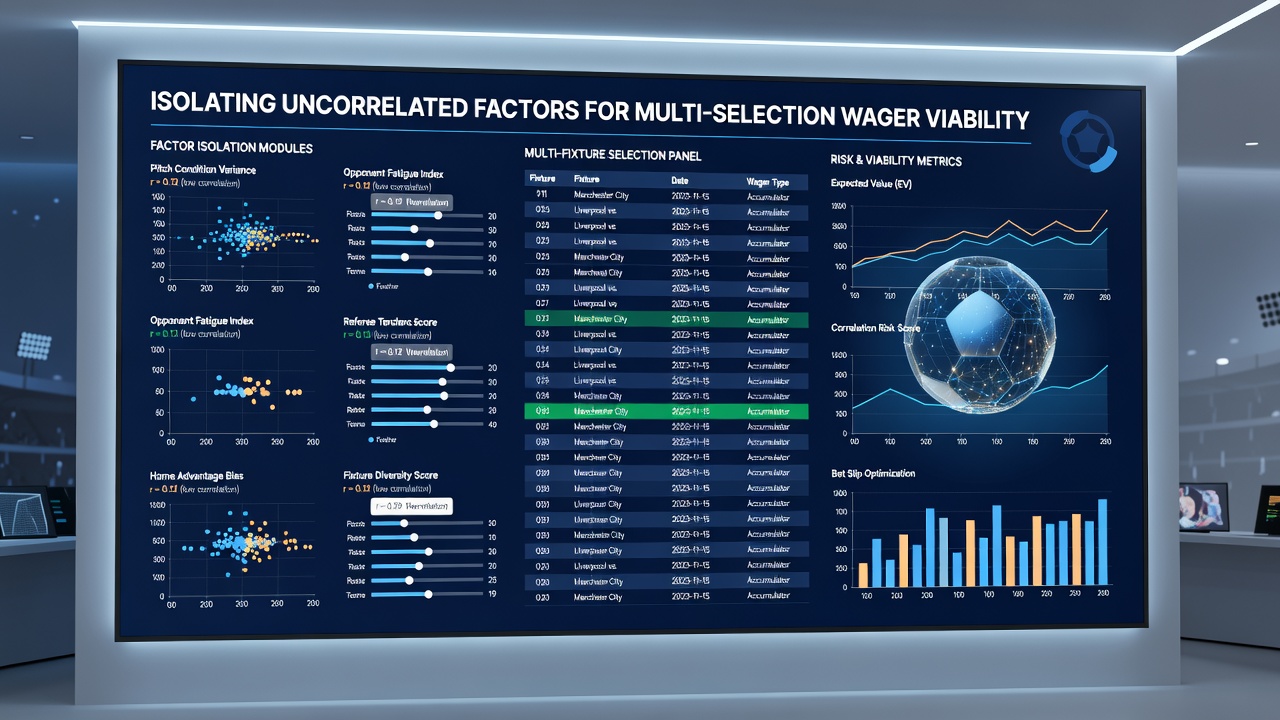
Further techniques include reviewing time-of-day effects alongside surface type differences when fixtures occur on consecutive days, allowing selectors to combine an evening kickoff advantage with a grass versus artificial pitch distinction that shows little mutual influence. Data compiled by university research groups in Australia demonstrates that such pairings maintain independence across southern hemisphere leagues that mirror European scheduling patterns during overlapping calendar windows.
Case Examples from Recent Seasons
Take a scenario where one selection targets a home side's set-piece conversion rate while another focuses on an away team's disciplinary record under a specific official, and records indicate these elements rarely move in tandem across unrelated fixtures. In another instance, analysts combined expected goal differentials rooted in recent opponent quality with a separate metric for squad depth during congested periods, producing accumulators that avoided the clustered failures common when selections share stylistic dependencies.
Figures from Canadian regulatory summaries reveal growing interest in markets that reward selections built on decoupled influences, particularly as more bettors access granular fixture data through official league releases. This trend aligns with observations that multi-selection structures gain viability when each component draws from unique causal chains rather than shared narratives such as overall team momentum.
Conclusion
Separation of uncorrelated factors provides a framework for constructing soccer multi-selections that rest on distinct foundations, and continued access to detailed statistical resources across international competitions supports ongoing refinement of these methods. As fixture calendars evolve, particularly with expanded schedules noted in mid-2026, the ability to distinguish independent variables remains central to maintaining structural integrity in such wagers.