Interweaving Probability Layers in Multi-Event Racing Circuit Analysis
Bianca Klein · Jul 18, 2026
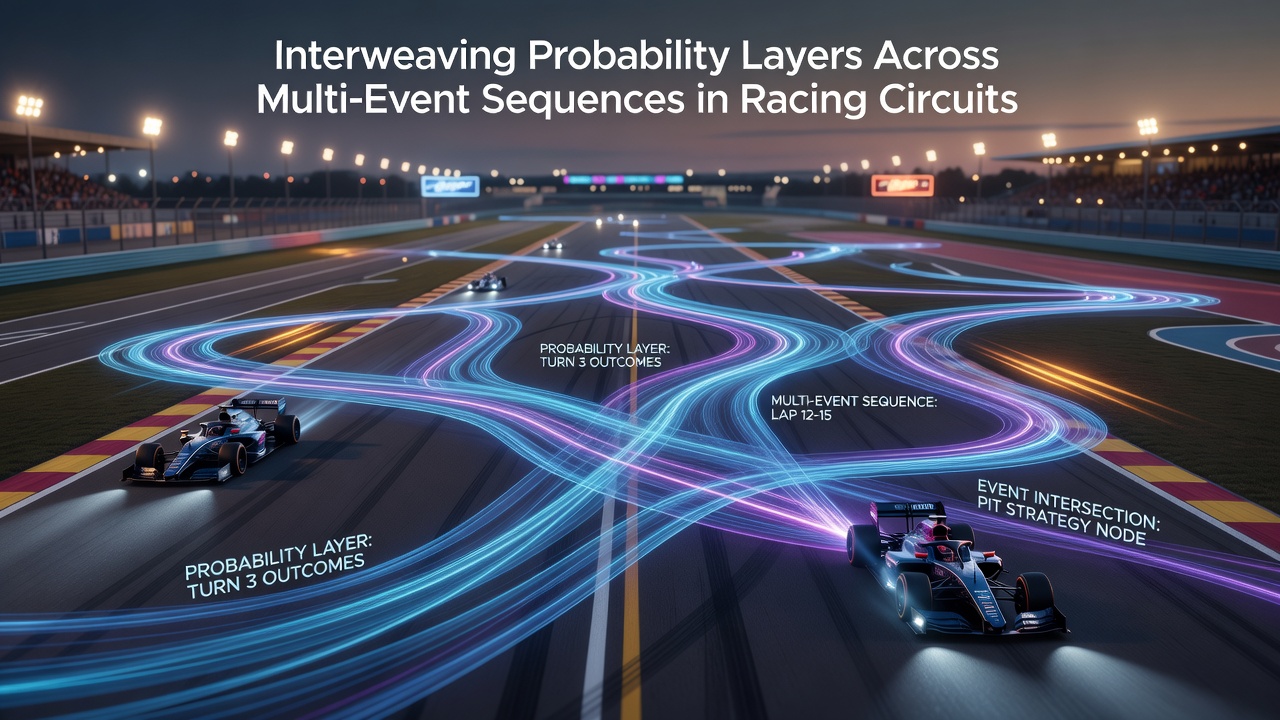
Interweaving Probability Layers in Multi-Event Racing Circuit Analysis
Researchers in motorsport analytics have developed methods that combine multiple probability distributions to evaluate outcomes across extended sequences of events on racing circuits, and these approaches integrate data from individual laps, pit stops, and weather variables into unified frameworks. Data from major series demonstrate how such layered models capture dependencies that single-event calculations overlook, allowing observers to track how early-stage results influence later probabilities without assuming independence between stages. Analysts apply these techniques to circuits where multiple races occur in a season, and the models account for track-specific factors such as corner banking angles and elevation changes that affect tire degradation rates. Studies published in transportation engineering journals indicate that probability layers built from lap-time histograms produce more accurate forecasts for race completion times when they incorporate correlations between consecutive segments rather than treating each lap as an isolated trial.Foundational Concepts in Sequential Modeling
Probability layers begin with base distributions derived from historical telemetry for each circuit segment, then these layers receive adjustments as new observations arrive during an event. Engineers at research institutions have documented how Bayesian updating techniques allow the overall sequence probability to shift dynamically, and this process reveals patterns such as increased variance in later laps when fuel loads decrease.
Multi-event sequences extend the same logic across an entire meeting or championship round, so models must interweave probabilities from qualifying sessions with those from feature races while recognizing that grid position and starting tire compounds create measurable dependencies. Figures from European motorsport data archives show that teams using layered approaches reduced prediction errors by measurable margins compared with simpler Monte Carlo simulations that ignored sequential correlations.
Application to Circuit-Specific Variables
Circuit geometry plays a central role because elevation changes and surface grip variations introduce non-stationary elements into lap-time distributions, and analysts therefore construct separate probability sublayers for each major sector before recombining them. In July 2026 several technical working groups presented updated frameworks that incorporate real-time sensor feeds from cars to refine these sublayers mid-event.
Weather transitions represent another interweaving challenge because precipitation probability affects braking distances and cornering speeds differently across a lap, so models combine meteorological forecasts with historical wet-weather performance data from the same circuit. Observers note that successful implementations maintain separate layers for dry, intermediate, and full-wet scenarios before merging them according to evolving conditions.
Integration Across Championship Rounds
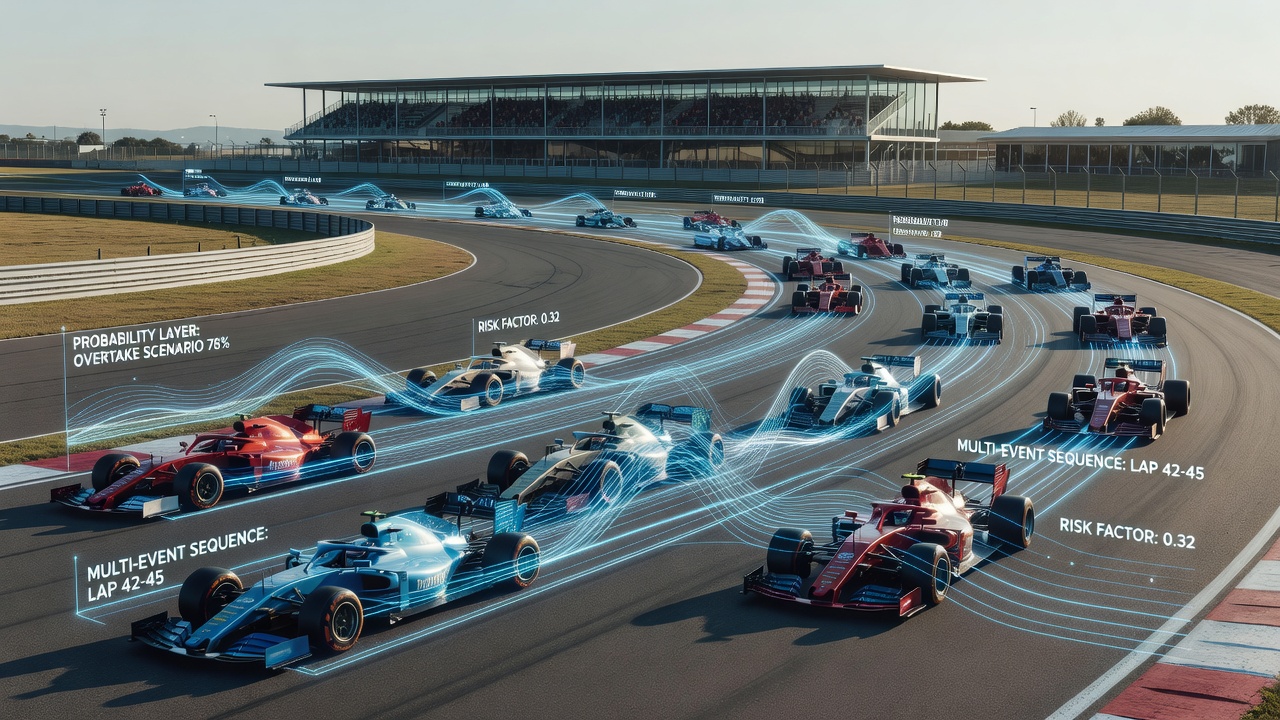
Championship calendars create longer sequences where cumulative points probabilities depend on outcomes at successive venues, and layered models therefore track how reliability statistics from one circuit influence expectations at the next. Research from Australian transport safety agencies has examined similar sequential dependencies in endurance events, revealing that component-failure probabilities require updating after each round rather than remaining fixed.
Regulatory bodies outside the United Kingdom, including Transport Canada and the European Union Agency for Railways in analogous high-speed contexts, have published guidelines encouraging the use of interdependent probability structures when assessing safety margins across repeated operations. These documents emphasize documentation of layer interactions so that downstream calculations reflect upstream realizations accurately.
Computational Considerations and Data Sources
Implementation requires efficient algorithms because the number of possible sequences grows exponentially with the number of events, yet practitioners reduce dimensionality through techniques such as copula functions that preserve marginal distributions while modeling dependence. Academic papers indexed on repositories maintained by major universities illustrate how vine copulas have been adapted specifically for motorsport telemetry streams.
Telemetry providers supply the raw inputs, and validation exercises compare model outputs against actual finishing orders from completed seasons, with metrics such as continuous ranked probability scores used to quantify improvement. Data released in mid-2026 from several series confirmed that layered models outperformed independent-event baselines across a range of circuit types including street courses and permanent road circuits.
Conclusion
Interweaving probability layers across multi-event sequences supplies analysts with structured ways to represent dependencies inherent in racing circuits, and ongoing work continues to refine the combination rules that merge sector-level, lap-level, and event-level distributions. Evidence from multiple technical reports indicates these methods deliver measurable gains in forecast precision when applied consistently to both single-meeting and championship-scale sequences.