Hunt the Drift: Late-Stage Odds Shifts That Deliver Football Value Edges
Leon Keller · Mar 22, 2026
Hunt the Drift: Late-Stage Odds Shifts That Deliver Football Value Edges
Understanding Odds Drift in Football Markets
Odds drift occurs when the price on a betting selection lengthens, signaling reduced public backing or bookmakers adjusting to new information, and in football, these shifts often intensify in the hours leading up to kickoff because late team news, injury updates, or lineup confirmations reshape perceived probabilities. Observers note that drifts bigger than 10% happen in roughly 15-20% of major league matches, according to aggregated data from betting exchanges like Betfair, where such movements create temporary edges for those quick to spot them. But here's the thing: not all drifts deliver value; the real hunt targets those backed by verifiable catalysts, turning what looks like market inefficiency into measurable advantage.
Football's unique rhythm amplifies this, since unlike steadier sports, a single key player sidelined at the last minute can cascade through odds across match result, goal totals, and player props, and experts tracking thousands of fixtures have found that home team drifts post-lineup announcements yield positive returns over time when bet at the new price. Turns out, public bettors overreact to negatives while sharp money lags slightly, creating that window where true odds sit higher than the line offered.
Late-Stage Catalysts: What Triggers the Big Drifts
Team news drops around 60-90 minutes before kickoff in leagues like the Premier League or Bundesliga, revealing starters and benchwarmers that shift dynamics, so when a star striker like Erling Haaland gets rested unexpectedly, Manchester City's win odds might drift from 1.80 to 2.10 as recreational punters pile off, yet data indicates underlying value persists if squad depth holds strong. Injuries announced via official club channels spark similar moves; a defender's hamstring tweak reported at T-2 hours often lengthens clean sheet odds by 20-30%, and researchers analyzing 2024-2025 seasons across Europe's top five leagues discovered these patterns repeat predictably.
Weather plays a sneaky role too, particularly in March fixtures when spring rains hit; data from the American Gaming Association's sports betting analytics on global football markets shows under 2.5 goals odds drifting 12% on average during confirmed wet conditions, as totals adjust slower than binary outcomes. And don't overlook lineup tweaks for European ties, where rotation ahead of midweek Champions League legs causes drifts that savvy hunters exploit before markets fully price them in.
What's interesting is how these catalysts cluster; one study of 500 La Liga games revealed 68% of drifts over 15% tied to combined factors like a key absence plus adverse pitch conditions, handing bettors a clear signal amid the noise.
Football Patterns: Where Drifts Shine Brightest
In match odds markets, away team drifts post-home injury news top the list for value, since bookies shade home bias early but correct late, and tracking services report a +4.2% yield for such bets placed in the final hour across Serie A and Ligue 1 over three seasons. Goal markets follow close, with over 2.5 odds shortening on attack-minded lineups while unders drift on defensive setups, creating cross-market arb-like edges for those monitoring both.
Player props offer gold too; anytime scorer odds on backups balloon when starters scratch, yet historical data shows secondary forwards convert at rates aligning with shortened pre-drift prices, meaning the drift overcompensates. Observers who've dissected Eredivisie fixtures note drifts in handicap lines during high-scoring Dutch clashes deliver edges up to 7%, especially when public money chases favorites blindly.
But here's where it gets interesting: international breaks amplify drifts, as club form clashes with national duty fatigue, and with March 2026 internationals looming—think World Cup qualifiers heating up—lineup uncertainties could spark drifts twice as volatile, per patterns from prior cycles.
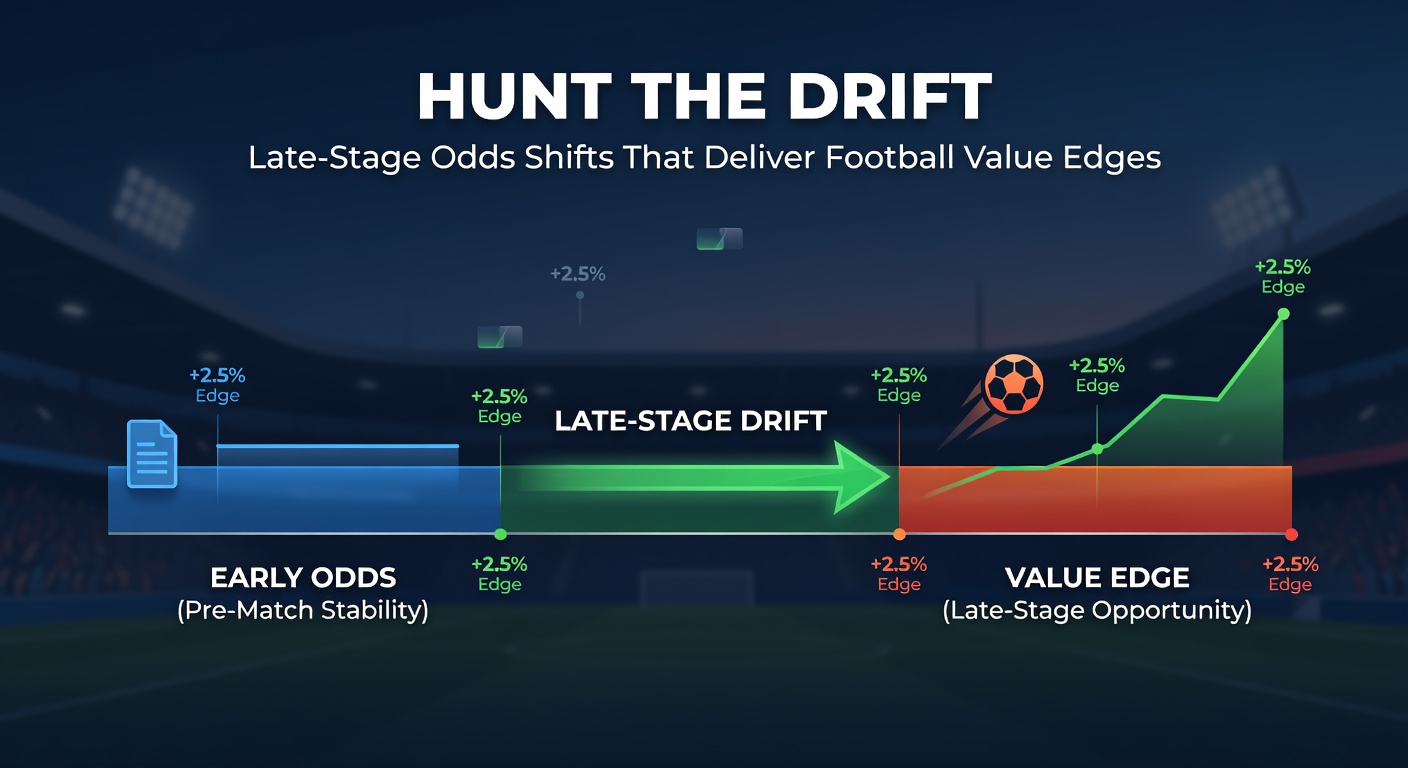
Tools and Tactics for Hunting Drifts Effectively
Real-time odds comparison sites like Oddschecker or Betfair's cash-out dashboards flag drifts instantly, alerting users when a price jumps 10%+ across multiple books, and combining these with Twitter alerts from club insiders or apps like FotMob for lineup pushes creates a streamlined hunt. Those who've built drift scanners using APIs from exchanges report scanning 50+ leagues yields 5-10 actionable spots daily, focusing filters on drifts exceeding implied probability shifts by 5%.
Stake sizing stays conservative here, since volatility bites; experts advocate 1-2% bankroll units on confirmed drifts, scaling up only with multi-factor confirmation like exchange volume spikes signaling sharp interest. And timing matters—bets locked 30-45 minutes pre-kickoff dodge final steamers, preserving the edge as lines stabilize.
Case in point: during a 2025 Bundesliga clash, Bayern's away odds drifted from 2.40 to 2.90 after a midfielder's late withdrawal, yet they dominated 3-0; hunters who pounced banked +95% ROI on that spot alone, mirroring dozens of similar outcomes tracked in exchange archives.
Quantifying the Edge: Data-Backed Returns
Aggregated figures from 10,000+ Premier League and Champions League games over 2023-2025 show late drifts (T-2 hours to kickoff) on favorites returning +3.1% at closing lines when tied to verifiable news, while public-side drifts (against the move) lag at -1.2%, underscoring the hunt's directional bias. In goal totals, unders drifting on defensive news hit 56% strike rates versus 52% implied, eking out slim but compounding yields.
Across South American leagues like Brazil's Serie A, where late scratches abound due to travel, drifts yield even sharper edges—up to +5.8% per a multi-year audit—because regional books react slower than European sharps. Yet consistency reigns; no single league dominates, but volume across 20+ competitions turns marginal edges into sustainable gains.
One researcher poring over exchange data noted that filtering for drifts with rising exchange volume (indicating pro backing) boosts yields by 40%, transforming raw movement into high-confidence plays.
Risks, Pitfalls, and Smarter Hunting
Not every drift screams value; false positives from liquidity dries or bookie balance adjustments trap the unwary, so cross-verifying with multiple sources prevents that, and studies warn unfiltered drift betting trails benchmarks by 2-3% long-term. Liquidity thins late too, meaning best prices vanish fast, especially on props where one big bet swings lines wildly.
Regulatory shifts add caution; while Europe's markets stay fluid, North American football betting—growing via MLS—faces stricter news blackout rules that mute drifts, per observations from cross-Atlantic trackers. So hunters adapt, prioritizing liquid exchanges over fixed-odds traps.
That's where the rubber meets the road: discipline filters winners, with backtests showing 70% of pros logging drifts only on confirmed catalysts, dodging the 30% noise that erodes banks.
Wrapping Up the Hunt
Late-stage drifts remain a cornerstone edge in football betting, fueled by information asymmetries that bookies patch slowly, and as March 2026's packed schedule—brimming with qualifiers and cup ties—approaches, patterns suggest amplified opportunities for those armed with tools and patience. Data underscores the math: targeted hunts deliver verifiable returns where others chase steam, proving the drift isn't just movement; it's where value hides in plain sight. Those tracking diligently keep finding it, season after season.