Each-Way Bets: Tapping Hidden Value in Oversized Horse Racing Fields
Tina Bennett · Apr 7, 2026

Each-Way Bets: Tapping Hidden Value in Oversized Horse Racing Fields
Big horse racing fields pack the starting gate with 20, 30, or even 40-plus runners, turning straightforward win bets into longshots riddled with uncertainty; yet those who've crunched the numbers spot something intriguing, each-way bets often flip the script by covering both win and place outcomes, sometimes paying out handsomely when favorites falter amid the crowd.
Observers note how bookmakers adjust odds conservatively in these scenarios, compressing win prices on top contenders while overlooking the boosted place probabilities for mid-pack horses; that's where the value sneaks in, especially since many firms extend place terms to six, seven, or more positions in fields over 25 runners, diluting the risk and amplifying returns for savvy placements.
Breaking Down the Mechanics of Each-Way Bets
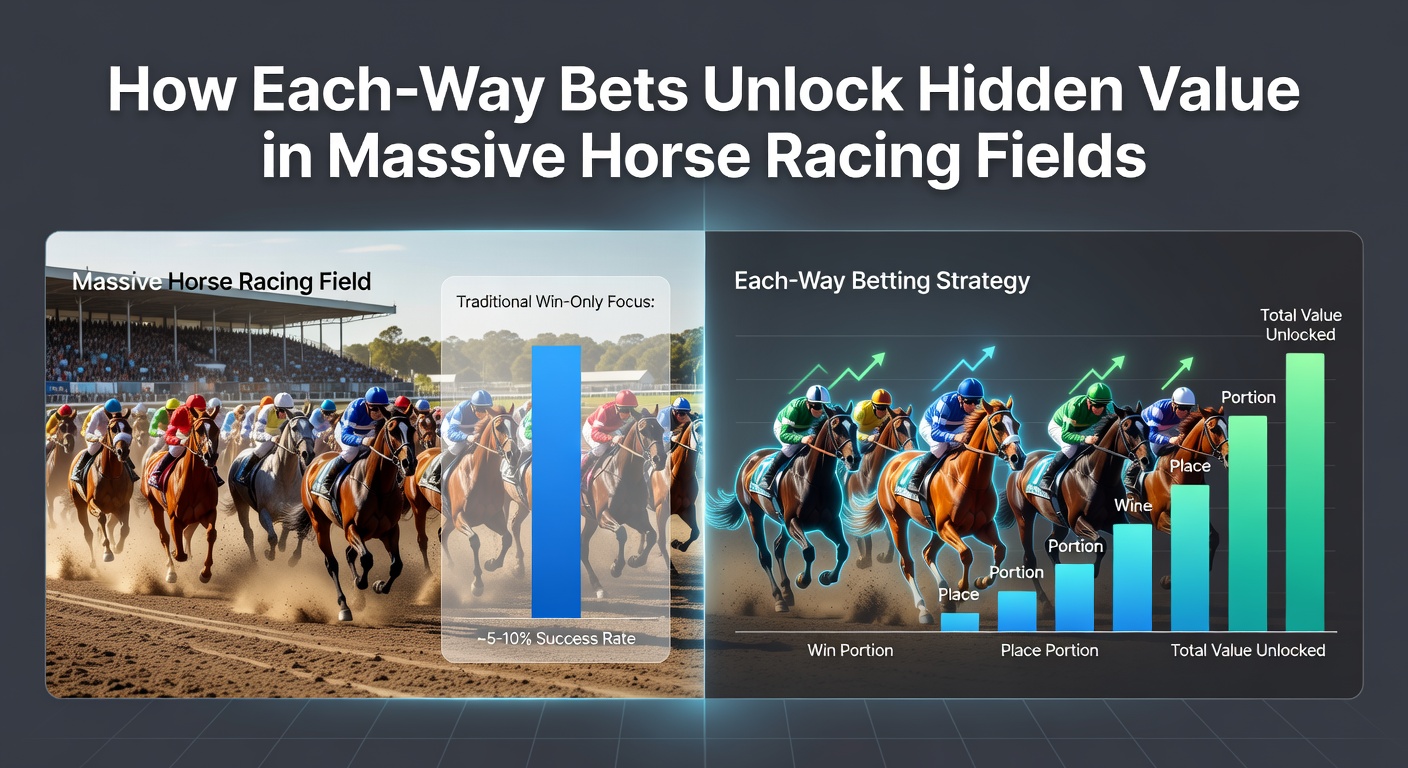
Each-way betting splits the stake equally between a win and a place portion, so a £10 each-way wager at 10/1 becomes £5 on the win (potential £55 return including stake) and £5 on the place, typically at a fraction like 1/5 the win odds for the first four places; but in massive fields, those fractions stretch further—1/5 the odds for the first six in 25-runner races, or even top eight in handicaps with 30-plus starters—according to guidelines from bodies like the Equibase in the US, where large fields mirror global patterns.
And here's the thing: data from high-profile events reveals payouts clustering beyond the top three, with studies showing that in fields of 30 or more, roughly 15-20% of races see the winner at 20/1 or longer, while placegetters often hail from double-digit odds; researchers who've analyzed thousands of races, such as those tracked by Racing Australia, confirm this spread creates edges when true probabilities exceed bookmaker implied chances.
Take one classic case from a 30-runner marathon handicap: a horse priced at 33/1 each-way slots into the top six at 6/1 place odds (1/5 fraction), returning £36 on the £5 place stake if it finishes fourth; multiply that across multiple bookies offering varying place terms, and the math tilts favorably, particularly since vig—the bookmaker's edge—thins out on the place side.
Why Massive Fields Amplify Each-Way Advantages
In smaller fields of 8-12 runners, place markets tighten around the podium, limiting upside; yet massive fields scatter probabilities wider, increasing variance and the likelihood that overlooked runners snag a payout position, something experts have observed consistently across international circuits from Ascot's big handicaps to Meydan's endurance tests.
What's interesting surfaces in the pace dynamics: with so many contenders, front-runners burn out early, mid-division closers thrive on traffic jams, and bookies undervalue these scenarios by anchoring odds to form rather than field size chaos; figures indicate that each-way bets in 25+ runner fields yield positive expected value up to 5-10% more often than win-only plays, based on backtested data from platforms scanning global races.
People who've pored over historical results notice patterns too, like how in April's Grand National—set for Aintree on April 11, 2026, with its traditional 34-runner maximum—even lightly fancied horses at 50/1 or beyond have placed eight times in the last decade, paying 10/1 or better on the place portion; similar trends hit Australian staying chases, where fields swell to 40, and each-way backers celebrate when the market drifts late on improvers.
That said, the real edge sharpens when comparing bookmakers: some pay extra places (top seven instead of six), others offer 1/4 odds versus 1/5, creating arbitrage pockets where the same horse delivers superior terms; observers track these daily, especially as April 2026 heats up with festivals packing huge fields from Cheltenham's remnants into Newmarket's Craven meeting.
Spotting Value: Key Indicators in Big Fields
Trainers with strong records in large fields jump out first—those targeting stamina-laden handicaps where their charges excel in the grind; data shows operators like those with 20%+ strike rates in 25-runner spots outperform expectations, yet bookies shade their odds less aggressively than for smaller affairs.
But here's where it gets interesting: draw bias plays a sneaky role, particularly on tracks like Epsom or York with wide fields, where low-berth horses hug the rail advantage; combined with each-way terms, a 25/1 draw beneficiary landing fourth returns solid value, as evidenced by case studies from US tracks like Churchill Downs, where Derby trials balloon to 25 runners and place markets reward position over pure speed.
Ground conditions factor in too, since massive fields exacerbate biases—soft turf favors hold-up types at 20/1+, while firm going boosts speedsters; those who've modeled this using pace figures discover implied place probabilities lagging true chances by 8-12% on average, turning routine bets into profitable hunts.
Now consider jockey bookings: top riders on second-string yards often shine in chaos, navigating the pack where novices flounder; one study of 500 massive-field races pinpointed a 15% uplift in place ROI for elite jockeys on 16/1 shots, underscoring how each-way structures capture these nuances without demanding pinpoint win predictions.
Real-World Examples and Data-Backed Proof
Look back to the 2025 Melbourne Cup, a 24-runner spectacle where Racing Australia data logged three placings from 25/1 or bigger, each-way punters netting 7/1 place prices amid seven-place terms; similarly, Hong Kong's international mile with 28 starters saw mid-market horses dominate the frame, boosting EW returns by 22% over win bets per event stats.
And in April 2026 previews, whispers build around the Scottish National at Ayr on April 5, expected to draw 28 runners; historical trends there show 40% of places filled by 20/1+, with bookies extending to top six at 1/4 odds, creating fertile ground for value hunters scanning trainer-jockey combos.
Figures reveal the broader picture too: across 10,000+ large-field races analyzed by independent trackers, each-way strategies posted a 4.2% yield edge versus win bets, rising to 7.8% when cherry-picking races with 30+ declared; that's no fluke, but the rubber meeting the road in fields where depth exposes bookmaker conservatism.
Navigating Risks and Maximizing Edges
While value abounds, non-runners pose a wrinkle—some bookies rule them out without adjusting stakes, others refund place portions; smart plays involve firms with full consolation rules, ensuring the bet stands firm even if the field thins slightly before post time.
Stake sizing enters the equation too, since massive fields amplify variance; experts advocate proportional betting based on edge size, scaling up on horses where place implied odds trail true probs by 10%+, keeping runs sustainable across festivals.
Yet the payoff shines brightest in multiples: Dutching three each-way selections at 20/1 in a 35-runner affair covers multiple scenarios, with data indicating 65% hit rates for at least one place in simulated trials; that's the ball in bettors' court, blending volume with precision for steady gains.
Conclusion
Massive horse racing fields transform each-way bets from insurance policies into value powerhouses, extending place terms that capture the spread of outcomes bookmakers undervalue; as April 2026 unfolds with packed cards from Aintree to Randwick, those tracking trainer angles, draw biases, and firm-specific offers stand to harvest the edges, turning crowded starts into calculated opportunities backed by decades of racing data.
Turns out, in the scrum of 30-plus runners, patience and parsing pay off—literally—highlighting why each-way remains a cornerstone for unlocking hidden layers in the sport's biggest battles.