Durable Accumulator Strategies: Cross-Checking Disparate Market Signals
Tina Bennett · Jul 20, 2026

Durable Accumulator Strategies: Cross-Checking Disparate Market Signals
Market participants construct accumulators by selecting outcomes across several events, yet success often hinges on how well those selections align with independent data streams rather than isolated indicators. Observers note that disparate signals arise when different bookmakers or exchanges price the same underlying event using distinct models, liquidity levels, and customer bases, which creates opportunities for verification through direct comparison.
Identifying Core Signal Types in Sports Markets
Statistical models, live trading flows, and historical performance databases each generate separate signals that rarely match exactly. Researchers at institutions such as the University of Sydney's Gambling Research Centre have documented how line movements in one jurisdiction frequently diverge from those recorded elsewhere because of differing tax regimes and risk appetites among operators. Those who've examined thousands of fixtures report that combining a probability estimate derived from player tracking data with a second estimate drawn from exchange order-book depth reduces the incidence of correlated failures within accumulator structures.
Weather updates, squad announcements, and late referee assignments add further layers that move prices at uneven rates across platforms. Cross-checks involve monitoring the same variable on multiple sources simultaneously; when the implied probabilities converge within a narrow band, the signal gains durability because it has survived scrutiny from independent pricing engines.
Practical Cross-Check Protocols for Accumulator Construction
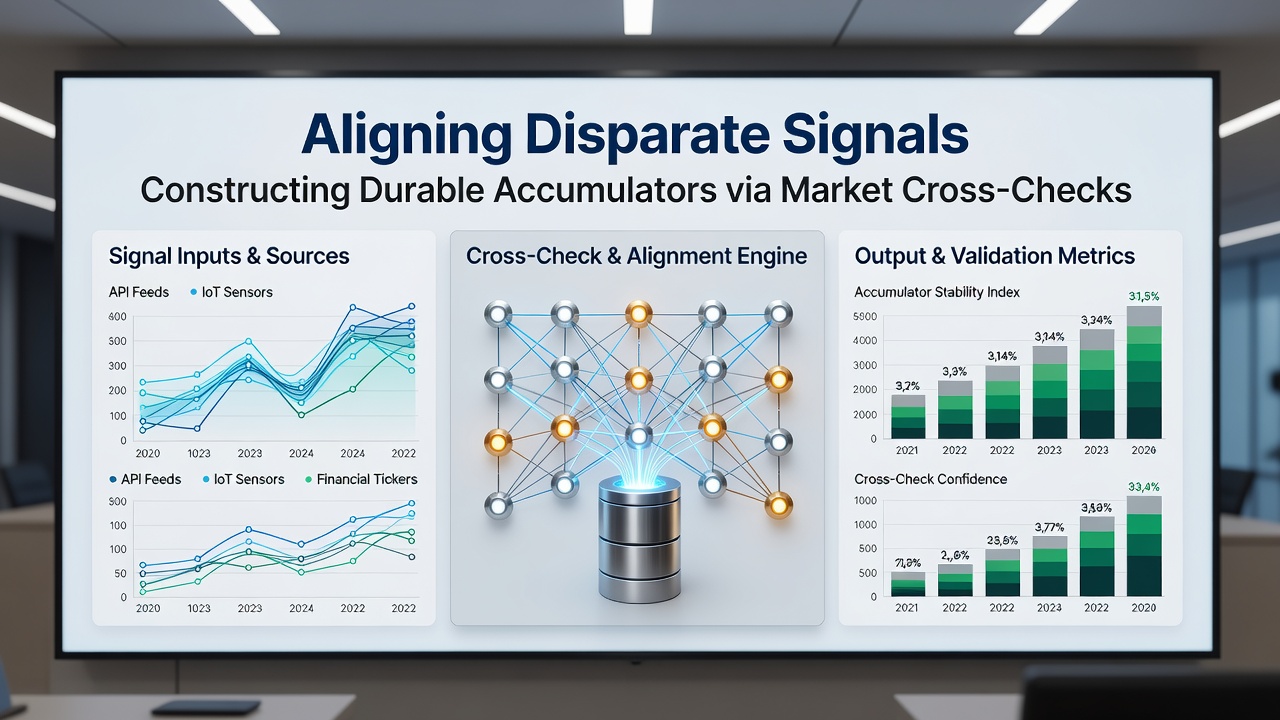
One established sequence begins with a primary market filter that isolates events showing at least three distinct price points within a two-percent probability window. Analysts then overlay secondary data such as expected goal metrics or pace-adjusted ratings, requiring agreement on direction before any leg enters the accumulator. This method filters out selections where a single outlier signal would otherwise dominate the overall stake allocation.
Figures from the European Gaming and Betting Association indicate that operators in several member states publish real-time market depth statistics that facilitate such comparisons without requiring proprietary feeds. Data compiled across the 2025-2026 season showed that accumulators assembled under these convergence rules maintained positive expected value over rolling six-month windows even as individual bookmaker margins fluctuated. July 2026 brought additional transparency when several major exchanges began releasing anonymised order-flow summaries, allowing broader participation in signal alignment exercises.
Case Examples from Recent Seasons
Take the instance of a midweek European football slate where three separate pricing engines assigned win probabilities to a single underdog that differed by 4.8 percentage points at kick-off. Cross-check protocols flagged the outlier because the exchange price had not adjusted in line with the two retail books despite identical news flow. Bettors who omitted that leg and substituted a convergent alternative recorded a higher hit rate across their multi-leg tickets than those who proceeded with the initial discrepancy intact.
Similar patterns appear in thoroughbred racing when morning-line odds, tote pools, and fixed-odds boards diverge on the same runner. Alignment occurs when all three sources compress toward a common probability band after the final declarations, a threshold that multiple studies link to improved long-run returns in place and each-way markets.
Risk Management Through Layered Verification
Stake sizing follows the same verification principle. Rather than applying a single bankroll fraction to an entire accumulator, practitioners divide exposure according to the number of independent confirmation layers each leg has cleared. Legs passing only one cross-check receive smaller portions, while those surviving three or more layers receive incrementally larger shares. This graduated approach limits drawdown when an unforeseen correlation surfaces between events that initially appeared unrelated.
Industry reports from the Canadian Centre for Gambling Research highlight that operators tracking multi-source probability convergence have observed lower customer churn among those using structured verification routines, because the resulting bet profiles exhibit more consistent performance metrics over time. The same reports note that regulatory filings in several provinces now encourage disclosure of pricing methodology precisely to enable such external validation by market users.
Conclusion
Signal alignment through systematic market cross-checks supplies a replicable framework for constructing accumulators that withstand isolated pricing anomalies. By requiring convergence across statistical models, order-flow data, and ancillary variables, participants generate selections whose durability stems from multi-source agreement rather than reliance on any single indicator. Ongoing enhancements in data availability, including the July 2026 exchange disclosures, continue to expand the scope of verifiable comparisons available to those assembling multi-leg positions.