Aligning Liquidity Thresholds Across Platforms for Steady Half-Time Wagers in Lower Leagues
Tina Bennett · Jul 2, 2026
Aligning Liquidity Thresholds Across Platforms for Steady Half-Time Wagers in Lower Leagues
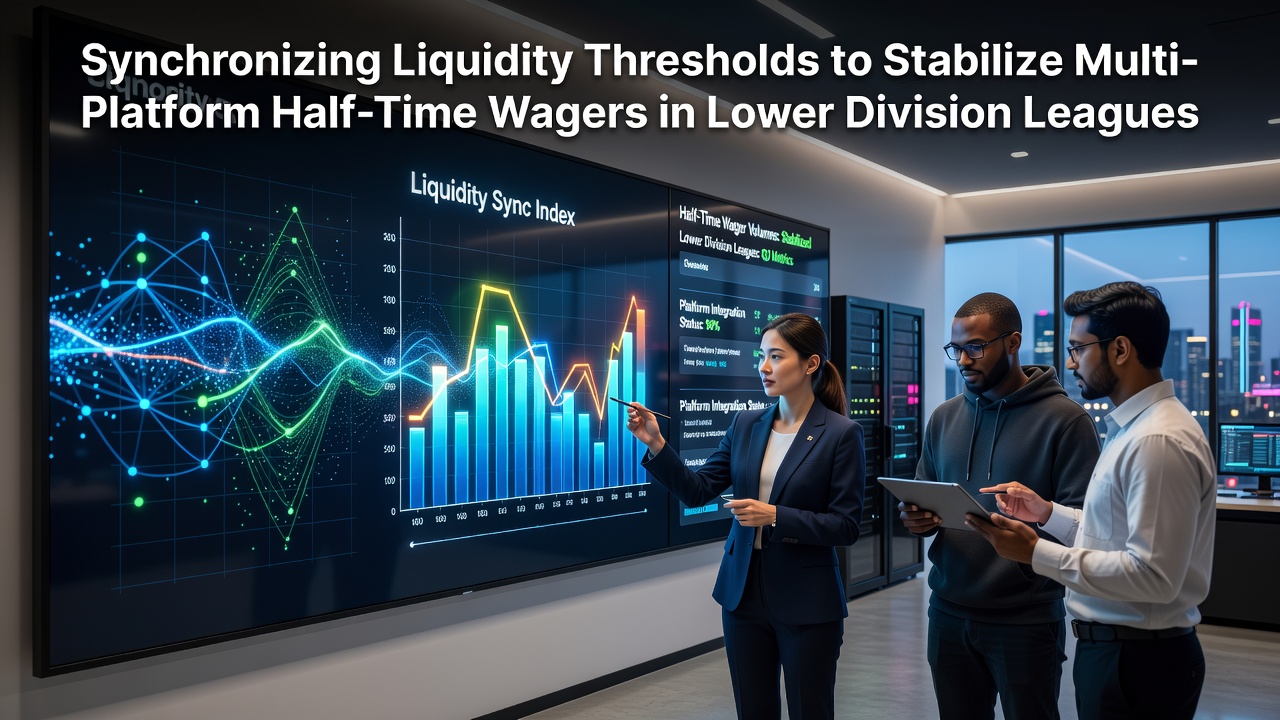
Lower division leagues present unique challenges for half-time wagers because betting volumes often run lower than those seen in top-flight competitions, yet operators still need mechanisms that keep odds stable when multiple platforms handle the same events at once. Observers note that liquidity thresholds act as the key control points where platforms decide how much stake they can accept before odds shift, and synchronization means those thresholds line up so one platform's limit does not trigger sudden movements that affect others.
Half-time markets in these leagues typically cover outcomes such as next-goal timing, lead changes, and over-under goals during the break period, and data from industry reports show these markets draw steady interest from recreational bettors who prefer shorter settlement cycles. When platforms operate independently, a surge on one site can exhaust available liquidity and force price adjustments that ripple outward, creating brief windows of inconsistency across the market.
How Liquidity Thresholds Function in Practice
Operators set liquidity thresholds based on historical volume patterns, current event popularity, and risk models that factor in the smaller average stake sizes common in lower leagues. Researchers have found that thresholds often sit between modest figures because total handle remains limited, yet the same limits must accommodate simultaneous activity from several bookmakers offering identical selections. Synchronization requires shared data feeds or agreed-upon reference points so each platform knows when another has already absorbed a portion of the available liquidity.
Take one league where matches in the fourth tier regularly attract combined half-time betting turnover of several hundred thousand units across five major platforms. If three of those platforms reach their individual thresholds within minutes of each other, the remaining two sites may still show outdated odds, and bettors quickly notice the discrepancy. Coordinated thresholds prevent that mismatch by scaling each platform's capacity in proportion to the overall market depth recorded at any moment.
Multi-Platform Coordination Challenges
Platforms differ in their risk-management systems, settlement speeds, and customer bases, which complicates any attempt to align thresholds in real time. Some rely on proprietary algorithms that adjust limits every few seconds, while others update thresholds only after fixed intervals or manual reviews. Experts have observed that lower division events amplify these differences because sharp bettors sometimes target them precisely when liquidity appears fragmented across sites.
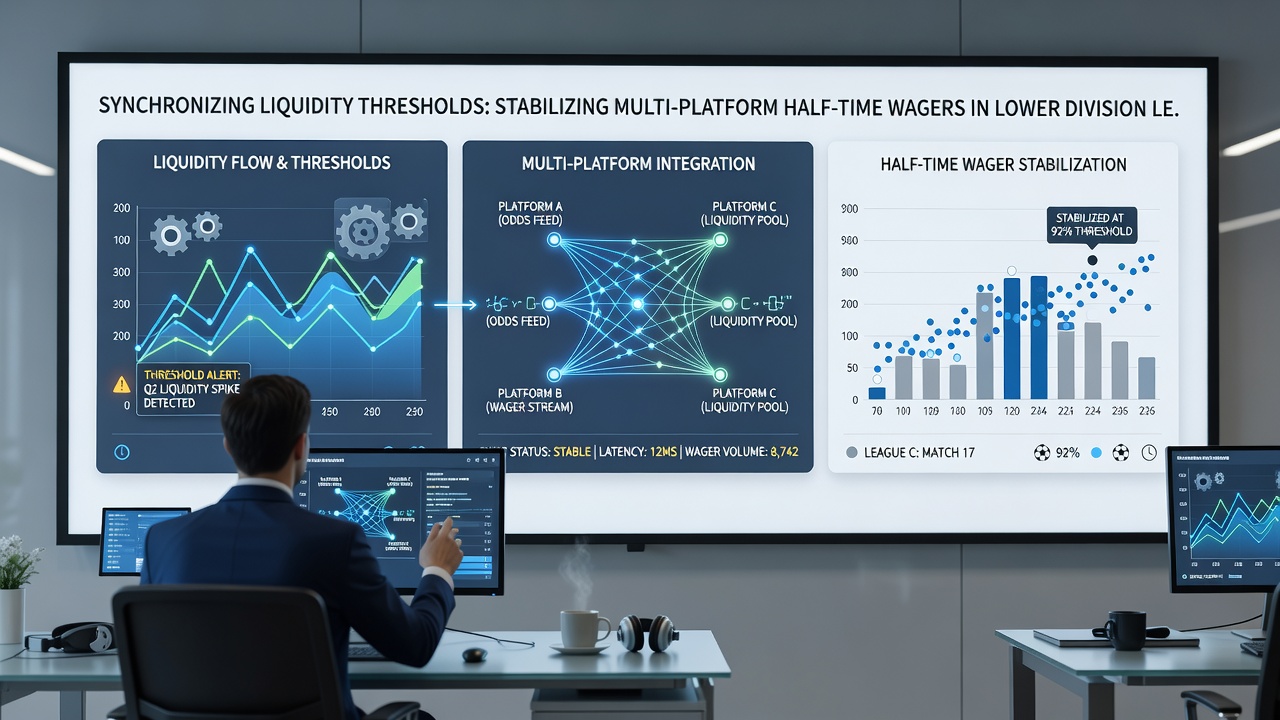
July 2026 brought fresh attention to this issue after several operators reported increased cross-platform traffic during midweek lower-league fixtures. Figures from European gaming associations indicated that synchronized threshold protocols reduced the frequency of odds jumps by measurable margins, allowing markets to absorb larger combined stakes without immediate repricing. Those protocols typically involve a central reference engine that broadcasts updated capacity levels to participating platforms every minute or after significant stake arrivals.
Implementation Approaches and Data Insights
Implementation usually begins with standardized data formats that describe current liquidity usage, followed by rules that cap each platform's exposure relative to the aggregate figure. One common method assigns percentages based on historical market share so a larger operator accepts more volume while smaller platforms stay within safer bounds. Studies from academic research groups have shown this proportional approach keeps price variance low even when total handle spikes unexpectedly.
Another technique employs predictive models that forecast half-time liquidity needs using pre-match betting patterns and team-specific metrics. Platforms then pre-commit to threshold bands that activate automatically once the match reaches the interval. Data indicates these models perform well in lower divisions because the underlying statistics remain relatively stable across seasons, even though absolute volumes stay modest.
What's interesting is how regulatory bodies outside the UK have begun encouraging such coordination. The Australian Communications and Media Authority published guidance in early 2026 that highlighted liquidity alignment as one route to maintaining orderly markets, while the Canadian Responsible Gambling Council examined similar practices in its annual review of sports wagering integrity. Both organizations noted that synchronized thresholds can limit the scope for rapid arbitrage attempts that sometimes appear in thinly traded lower-league markets.
Effects on Market Stability and Bettor Experience
Once thresholds align, half-time odds tend to move in smaller increments and settle faster after each new stake. Bettors therefore encounter fewer instances where one platform's price diverges sharply from others, reducing the chance of unintended value or disadvantage. Industry organizations tracking these metrics report that complaint volumes related to half-time market volatility drop when synchronization is active, although overall participation levels remain driven by the underlying match quality and league standings.
Lower division clubs benefit indirectly because steadier markets support continued operator interest in offering their fixtures. Without coordinated liquidity controls, some platforms might reduce exposure or withdraw certain half-time selections during periods of uneven activity, narrowing the range of available bets. Coordinated thresholds help preserve that range by distributing risk more evenly across participants.
Conclusion
Synchronizing liquidity thresholds provides a practical framework for managing half-time wagers across platforms in lower division leagues where volumes stay modest yet interest remains consistent. The approach relies on shared data standards, proportional capacity rules, and predictive models that adjust limits dynamically during matches. Evidence from 2026 indicates measurable reductions in odds volatility and improved consistency for participants when these methods operate together. As more operators adopt aligned systems, the structure of these markets continues to evolve toward greater predictability without restricting access to the selections themselves.